
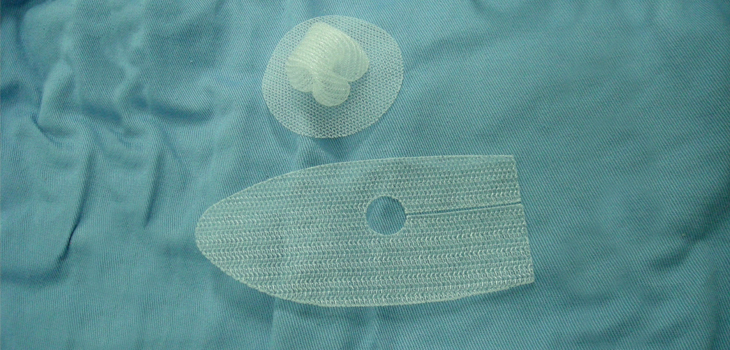
Mayo Clinic researchers have extended their previous work on patellar tendon disruptions reconstructed with a step-wise surgical technique using Marlex mesh on an even larger series of cases.
Marlex Mesh Viable for Extensor Mechanism Reconstruction?
2 min read Premium comments
#totalkneearthroplastySecondary#kneesocietyscore#extensormechanism
Their work, “Extensor Mechanism Reconstruction with Use of Marlex Mesh: A Series Study of 77 Total Knee Arthroplasties,” appears in the August 1, 2018 edition of The Journal of Bone and Joint Surgery.
Matthew P. Abdel, M.D., associate professor of Orthopedic Surgery at Mayo Clinic College of Medicine and co-author on the study told OTW, “Extensor mechanism disruptions after total knee arthroplasty (TKA) are a dramatic and concerning problem for patients and surgeons alike. Multiple reconstructive techniques have been described with limited long-term success. We previously reported on a small series of patellar tendon disruptions reconstructed with our step-wise surgical technique and the use of Marlex mesh.”
“The goal of this paper was to report our substantially larger series (77 cases) including not only patellar tendon disruptions, but also quadriceps tendon disruptions and catastrophic patellar fractures with disrupted extensor mechanisms.”
The authors wrote, “During the period of 2000 to 2015 at a single tertiary care academic institution, 77 patients (77 TKAs) underwent reconstruction with use of Marlex mesh for an extensor mechanism disruption (27 quadriceps tendon disruptions, 40 patellar tendon disruptions, and 10 patellar fractures)…Eighteen (23%) of the patients underwent mesh reconstruction with the primary TKA in place, and 59 (77%) had mesh reconstruction at the time of revision TKA.”
Dr. Abdel told OTW, “Of interesting note, 76% of patients had a revision TKA at time of extensor mechanism reconstruction with Marlex mesh, and 26% of patients had a previous non-Marlex mesh attempt at an extensor mechanism reconstruction at an outside hospital. For a difficult cohort of patients, we were impressed with our results, including the following facts: 65 of the 77 mesh reconstructions were in place at the time of the latest follow-up; the Knee Society Score (KSS) significantly improved following the reconstruction (p < 0.001); Extensor lag improved by a mean of 26°, with mean postoperative extensor lag measuring 9° (p < 0.001)
“It is important that surgeons should know these three things: the stepwise surgical approach described in this paper is essential; not varying the mesh utilized in this paper is essential; three months of cast immobilization is essential.”
Author
React:
Discussion
This is a fascinating development. In my practice we've seen similar outcomes with the revised protocol. The key differentiator seems to be patient selection criteria. Has anyone else noticed the correlation with BMI thresholds?
Great point. I'd push back slightly on the conclusion, the sample size in the cited study is too small to draw population-level inferences. That said, the directional signal is compelling and worth a larger RCT.
We implemented a similar approach last year. Early results are promising but we're still gathering 12-month follow-up data. Happy to share our protocol if anyone is interested.
Join the conversation
Orthopedic professionals are discussing this. Sign in and upgrade to read every comment and add your voice.