
The first ever consensus statement on concussion management guidelines for combat sports, “Concussion management in combat sports: Consensus statement from the Association of Ringside Physicians” was recently published online in the British Journal of Sports Medicine. The Association of Ringside Physicians is an international non-profit organization dedicated to the health and safety of the combat sports athletes.
First Ever Concussion Guidelines for Combat Sports
2 min read Premium comments
Secondary#combatsportsathletes#concussionmanagement
The consensus statement includes the following guidelines:
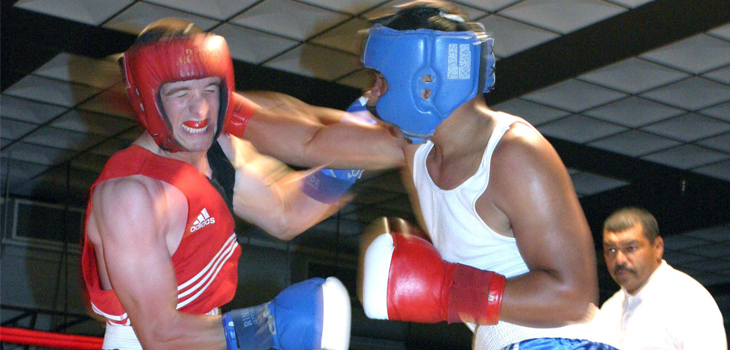
- If a fighter shows signs of a concussion, which include but are not limited to headache, confusion, blurred/double vision, nausea/vomiting and balance/gait issues, during a bout, the fight should be stopped.
- If a combat sports athlete sustains a TKO (technical knock out), secondary to blows to the head, he or she should be suspended from competition for at least 30 days. The fighter should also refrain from sparring for 30 days as well.
- If a combat sports athlete sustains a KO (knock out) without LOC (loss of consciousness) secondary to blows to the head, it is recommended that he or she be suspended from competition for a minimum of 60 days. It is also recommended that the fighter refrain from sparring for 60 days as well.
- If it is a KO with LOC secondary to blows to the head then the recommendation is for a suspension from competition for a minimum of 90 days and that the fighter refrain from sparring for 90 days as well.
- All combat sports athletes, including the winners should undergo concussion evaluation immediately after a bout right there at ringside, but again later in a more controlled environment.
- If a combat sports athlete has sustained a concussion or loss via TKO/KO secondary to head strikes, but their symptoms are improving and do not increase with activity then they can participate in non-contact training and conditioning one week after the injury.
- It is also recommended that no combat sports athlete competes or engaged in sparring activity while experiencing any concussion symptoms.
The Association of Ringside Physicians also stated that “in addition to the above-mentioned periods of suspension, we recommended that a combat sports athlete’s suspension continue until a specialist physician trained in concussion management clears the fighter.”
They also called for repeat baseline concussion testing annually to alert all those involved in an athlete’s care to any cognitive decline.
The Association of Ringside Physicians emphasized that the consensus statement does not address the management of moderate to severe forms of traumatic brain injury, nor the return to competition protocol for these athletes. Neither does the consensus statement address neuroimaging guidelines in combat sports.
Author
React:
Discussion
This is a fascinating development. In my practice we've seen similar outcomes with the revised protocol. The key differentiator seems to be patient selection criteria. Has anyone else noticed the correlation with BMI thresholds?
Great point. I'd push back slightly on the conclusion, the sample size in the cited study is too small to draw population-level inferences. That said, the directional signal is compelling and worth a larger RCT.
We implemented a similar approach last year. Early results are promising but we're still gathering 12-month follow-up data. Happy to share our protocol if anyone is interested.
Join the conversation
Orthopedic professionals are discussing this. Sign in and upgrade to read every comment and add your voice.