
Reflexion Health, Inc., a virtual physical therapy company, recently announced its agreement with Delta Joint Management to bring VERA, Reflexion Health’s FDA-cleared Virtual Exercise Rehabilitation Assistant, into the homes of patients who are recovering from total joint replacement surgery.
Delta Joint Management Uses Vera Technology to Improve Patient Care
1 min read Premium comments
Secondary#reflexionhealth#deltajointmanagement#veraplatform
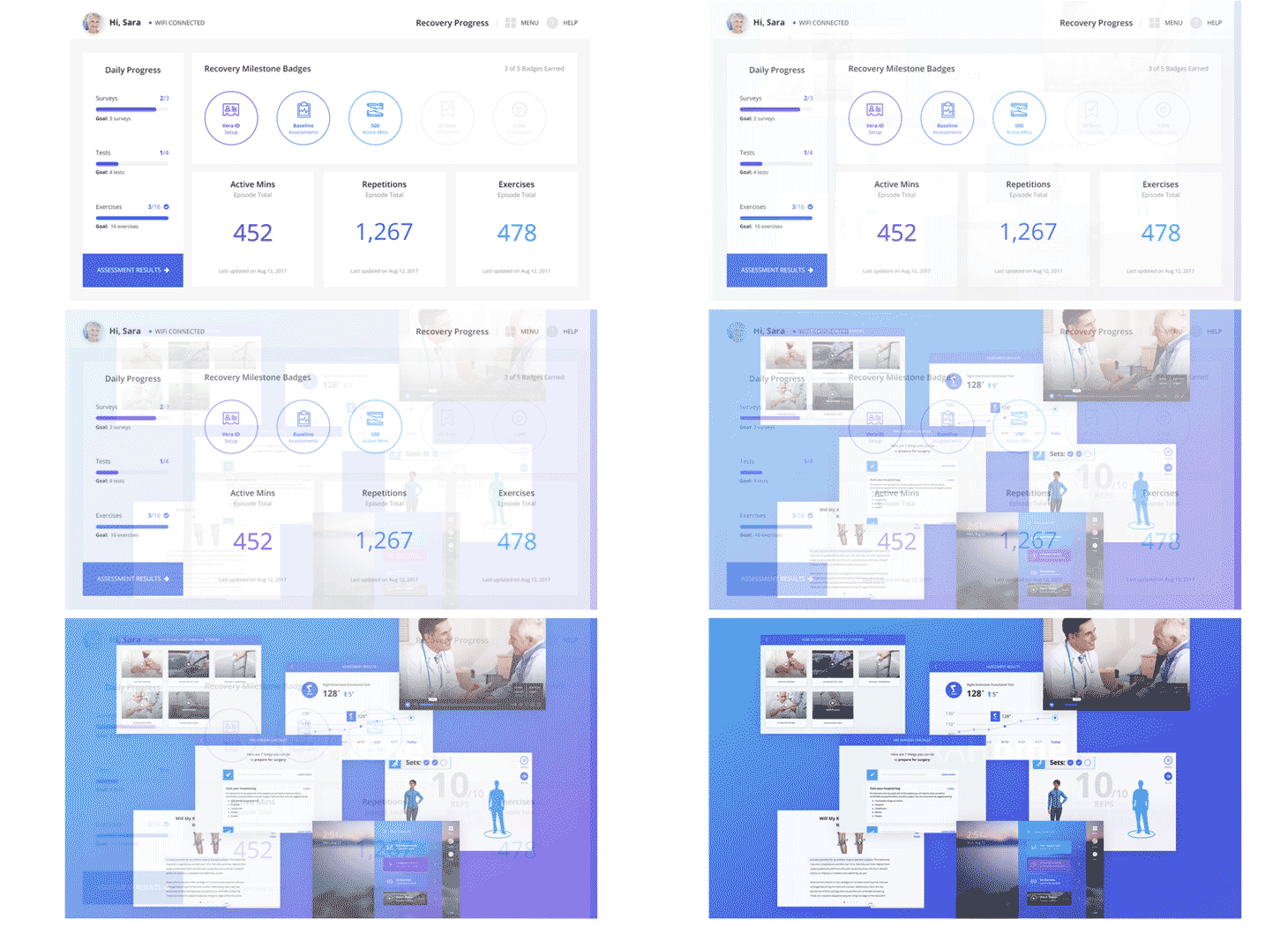
The VERA technology by Reflection Health is a digital platform that combines avatar coaching and 3D biometrics with remote monitoring capabilities that allows doctors to closely monitor their patients even after they were discharged home.
“As a treating physician, it’s important to me that I have visibility into how a patient is doing after surgery,” said Stephen Lucey, M.D., an orthopedic surgeon at Delta Joint Management and Sports Medicine and Joint Replacement.
“VERA gives me that insight into patient recovery even when my patients are one or two states away—increasing our potential footprint as a practice and our ability to help patients near and far.”
Delta Joint Management is a group of three private orthopedic practices in Greensboro, North Carolina, that focuses on providing value-based care to postoperative total joint replacement patients.
Delta’s doctors also manage payments via the bundled model so they are always on the lookout for ways to cut inefficient spending. Using the VERA technology with its remote monitoring and telehealth visits, reduces the burden placed on patients to find rides to multiple follow-up appointments.
“We’re always looking for ways to improve patient outcomes, reduce costs and increase value to the healthcare system,” Lucey added. “Reflexion Health’s VERA technology is intuitive, smart and patient-friendly.”
Data from several clinical studies on VERA has shown that it does improve compliance and saves time, steps and costs in post-acute rehabilitation.
Joseph Smith, M.D., Ph.D., chief executive officer, Reflexion Health, said, “We’re proud to partner with Delta Joint Management to provide patient-focused, data-driven and value-based care.”
Author
React:
Discussion
This is a fascinating development. In my practice we've seen similar outcomes with the revised protocol. The key differentiator seems to be patient selection criteria. Has anyone else noticed the correlation with BMI thresholds?
Great point. I'd push back slightly on the conclusion, the sample size in the cited study is too small to draw population-level inferences. That said, the directional signal is compelling and worth a larger RCT.
We implemented a similar approach last year. Early results are promising but we're still gathering 12-month follow-up data. Happy to share our protocol if anyone is interested.
Join the conversation
Orthopedic professionals are discussing this. Sign in and upgrade to read every comment and add your voice.