
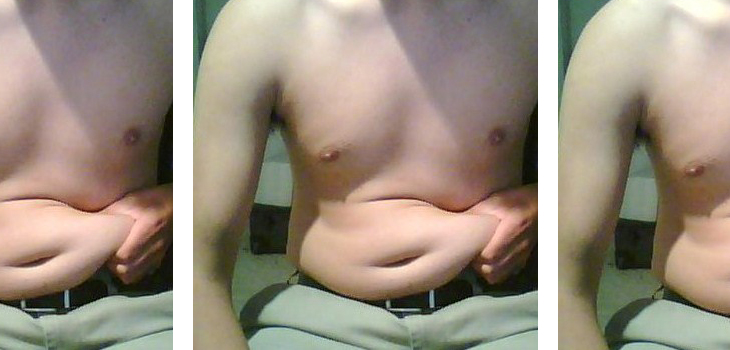
How, exactly, does obesity exacerbate osteoarthritis? Is it a factor of greater loading or is something more metabolic?
Deconstructing the Role of Obesity in Osteoarthritis
2 min read Premium comments
#osteoarthritis#obesity#bodymassindexSecondary
A team from Austria tackled that question in a new study, “Is local or central adiposity more strongly associated with incident knee osteoarthritis than the body mass index in men or women?” appears in the August 2018 edition of Osteoarthritis and Cartilage.
Adam Culvenor, P.T., Ph.D., with the Institute of Anatomy at the Paracelsus Medical University Salzburg & Nuremberg in Austria and study co-author on the study explained the study to OTW, “Obesity is the strongest risk factor for the development of knee osteoarthritis (OA) in women and is second only to knee injury in men.”
“Historically, this link between obesity and knee OA was thought to be driven by mechanical mechanisms (i.e., increased weight/load on the knee). However, more recent evidence suggests that this relationship may also be driven by metabolic factors (i.e., release of proinflammatory cytokines from adipose tissue cells that can influence joint cartilage).”
“Different distributions of adipose tissue (i.e., peripheral – thigh vs central – abdominal) vary in their metabolic activity. The simple measure of BMI [body mass index] is typically used to measure obesity, yet this does not provide any information regarding distribution of adipose tissue (and also includes muscle mass, which can be beneficial for joint health). Therefore, we were interested in evaluating whether local (thigh) or central (abdominal) adipose tissue provide more information than the BMI alone in predicting the onset of knee OA.”
For the study, the investigators enrolled 161 Osteoarthritis Initiative (OAI) participants (62% female) with incident RKOA [radiographic knee osteoarthritis] (Kellgren/Lawrence grade 0/1 at baseline, developing an osteophyte and joint space narrowing (JSN) grade ≥1 by year-4) and matched that group with 186 controls (58% female) without incident RKOA. Baseline waist-height-ratio (WHtR), and anatomical cross-sectional areas of thigh subcutaneous (SCF) and intermuscular fat (IMF). The two groups were measured with the latter group’s measurements coming via axial magnetic resonance images.”
“From the 347 people we assessed over a period of 4 years, no single central or peripheral adiposity measure was significantly associated with incident knee OA independent of BMI, nor was any adiposity measure more strongly associated with the development of knee OA than the simple measure of BMI.”
“The commonly used measure of BMI to assess obesity appears to be sufficient to capture the elevated risk of knee osteoarthritis development associated with greater amounts of localized adiposity.”
“Greater amounts of adipose tissue throughout the body (i.e., thigh fat, abdominal fat) increases the risk of knee OA development in both men and women. However, specifically measuring the amount of localized fat in different body parts provides no more additional information on risk of knee OA development than the simple measure of BMI. Strategies to decrease body fat in individuals with an elevated BMI are recommended to minimize the risk of knee OA development in adults.”
Author
React:
Discussion
This is a fascinating development. In my practice we've seen similar outcomes with the revised protocol. The key differentiator seems to be patient selection criteria. Has anyone else noticed the correlation with BMI thresholds?
Great point. I'd push back slightly on the conclusion, the sample size in the cited study is too small to draw population-level inferences. That said, the directional signal is compelling and worth a larger RCT.
We implemented a similar approach last year. Early results are promising but we're still gathering 12-month follow-up data. Happy to share our protocol if anyone is interested.
Join the conversation
Orthopedic professionals are discussing this. Sign in and upgrade to read every comment and add your voice.