
About time. A better rat model for posttraumatic joint stiffness.
Better Rat Model for Posttraumatic Joint Stiffness?
2 min read Premium comments
Secondary#knee#postraumaticjointstiffness
Researchers in Germany posed the following question: “Can we improve on the existing animal models of posttraumatic joint stiffness?”
The answer, it seems, is “yes.”
Complete details are available in their article: “A novel rat model of stable posttraumatic joint stiffness of the knee,” was published in the July 25, 2018 edition of the Journal of Orthopaedic Surgery and Research.
Andreas Baranowski, M.D. told OTW, “We faced the problem that there are just a few rat models of posttraumatic joint stiffness (PTJS) in the knee joint and no one was able to show that the evoked contracture outlasts a period of remobilization. Small animal models are important for the development of treatment and prevention strategies of PTJS in the future.”
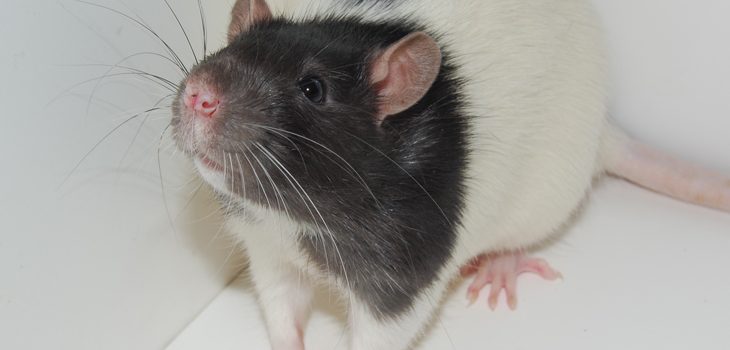
The authors started with 30 skeletally immature male Sprague Dawley rats and then performed a surgical intervention which created in the rats knee hyperextension, extracartilaginous femoral condyle defects. The researchers employed a Kirschner (K)-wire transfixation for 4 weeks with the knee joint in 146.7° ± 7.7° of flexion (n = 10 per group, groups I–III).
After they removed the K-wire, rat group I’s joints were measured and rat groups II and III were allowed 4 or 8 weeks of free cage activity, respectively, before joint angles were measured. Eighteen rats (n = 6 per group, groups Ic–IIIc) served as untreated control.
The resulting study, said Dr. Baranowski. “Established a reproducible model of stable posttraumatic knee joint flexion contracture in rats. The few existing rat models of PTJS in the knee joint were not able to show that the evoked contracture outlasts a period of remobilization.”
“We could demonstrate that the posttraumatic contracture originates from the joint and capsule and that there is no additional posttraumatic muscular contribution. Future studies with our new rat model will include medical treatment options for PTJS and might lead to new options for prevention and treatment in human beings.”
“Posttraumatic joint contracture (PTJS) represents a pathological reduction of the range of motion (ROM), which has a devastating impact on the articular function and activities of daily life. PTJS is be very difficult to treat and often persists despite of treatment. We established a reproducible model of stable posttraumatic knee joint flexion contracture in rats. Future studies with our new model will include medical treatment options for PTJS.”
Author
React:
Discussion
This is a fascinating development. In my practice we've seen similar outcomes with the revised protocol. The key differentiator seems to be patient selection criteria. Has anyone else noticed the correlation with BMI thresholds?
Great point. I'd push back slightly on the conclusion, the sample size in the cited study is too small to draw population-level inferences. That said, the directional signal is compelling and worth a larger RCT.
We implemented a similar approach last year. Early results are promising but we're still gathering 12-month follow-up data. Happy to share our protocol if anyone is interested.
Join the conversation
Orthopedic professionals are discussing this. Sign in and upgrade to read every comment and add your voice.