
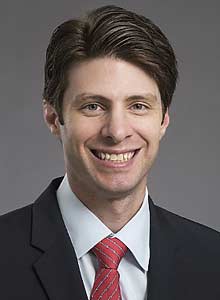
Alan Blank, M.D., an orthopedic oncologist, has joined Midwest Orthopaedics at Rush in Chicago. According to Rush, Dr. Blank treats both malignant and benign tumors and specializes in sarcoma surgery, metastatic bone disease, and limb salvage involving complex joint reconstruction. He also treats a comprehensive set of non-cancer related general orthopedic conditions. Dr. Blank’s addition to MOR means that it now has Chicago’s largest orthopedic oncology team.
Alan Blank, M.D. Joins Midwest Orthopaedics at Rush
2 min read Premium comments
#orthopediconcology#alanblank#sarcoma
Dr. Blank joins Midwest Orthopaedics at Rush with a special interest in treating bone and soft tissue sarcomas. He is very involved with the development of a comprehensive cancer database as well as a tumor tissue repository with the goal of identifying better treatments and outcomes for patients.
Dr. Blank is a graduate of Chicago Medical School, where he earned both a medical degree and a master’s in Biomedical Sciences and Research. He went on to complete an orthopedic surgery residency in New York City at New York University Langone Medical Center and the Hospital for Joint Diseases.
While there, he received the Resident Research Award for his work on prophylactic surgical treatment for metastatic bone disease. After residency, he went to the renowned Huntsman Cancer Institute at the University of Utah, Salt Lake City, for a year of training in adult and pediatric musculoskeletal oncology and sarcoma surgery.
Dr. Blank told OTW, “Clinical care is always my top priority. Orthopedic oncology patients can have complicated issues and our multidisciplinary care team takes pride in addressing each patient in a unique and complete manner. Resident education is closely associated with clinical care, as we have a number of residents and medical students on service at any given time. Ensuring they obtain a strong orthopedic oncology education is very important to me. I also dedicate time during the week, after clinical responsibilities are completed, to meet with research colleagues, students and registry coordinators in order to keep our research efforts moving forward and our clinical database to be collecting accurate data.”
“Every day in practice I think about why we do the things we do, and what literature we have to support it. When there is no strong support or explanation in the literature, I start thinking about a potential study. I think that by utilizing big data analytics technology, as our multi-institution patient registry is beginning to gather, we will be able to learn a lot about our orthopedic oncology patients. Typically, orthopedic oncology literature has been small single institutional cohorts. By combining multi-institutional data our numbers will be larger and we will be able to see trends that we were unable to appreciate in the past. I think this will lead to more significant findings, more prospective studies and improved patient outcomes.”
Author
React:
Discussion
This is a fascinating development. In my practice we've seen similar outcomes with the revised protocol. The key differentiator seems to be patient selection criteria. Has anyone else noticed the correlation with BMI thresholds?
Great point. I'd push back slightly on the conclusion, the sample size in the cited study is too small to draw population-level inferences. That said, the directional signal is compelling and worth a larger RCT.
We implemented a similar approach last year. Early results are promising but we're still gathering 12-month follow-up data. Happy to share our protocol if anyone is interested.
Join the conversation
Orthopedic professionals are discussing this. Sign in and upgrade to read every comment and add your voice.