
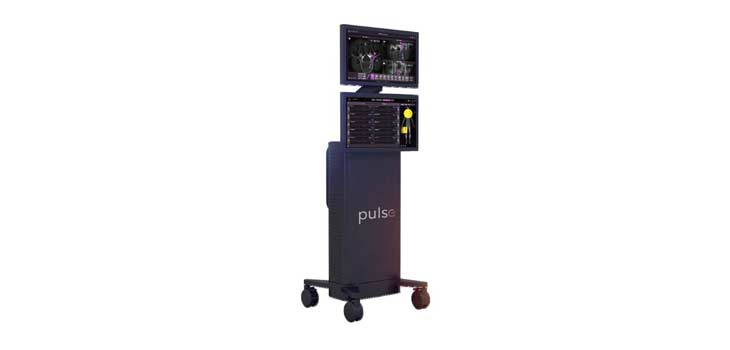
San Diego-based NuVasive, Inc. has announced that its Pulse surgical automation platform has received 510(k) clearance from the FDA. According the company, “Pulse is the foundation for Surgical Intelligence, the Company’s ecosystem enabling better surgery. Pulse introduces 2D- and 3D-navigation and smart imaging capabilities while integrating the Company’s leading neuromonitoring, surgical planning, radiation reduction and patient-specific rod bending technologies. This single platform addresses a broad range of clinical challenges, with enhanced utility and intuitive workflow. The fusion of these technologies supports reproducible spine surgery at facilities ranging from major health systems to ambulatory surgery centers.”
510(k) for NuVasive’s Surgical Automation Platform
2 min read Premium comments
#nuvasiveSecondary#minimallyinvasivesurgery
“To help surgeons overcome frequent visualization challenges during spine surgery, Pulse integrates multiple high-resolution cameras combined with low-profile, 360-degree arrays to drive uninterrupted line-of-sight and optimized procedural workflow. Additionally, Pulse introduces advanced artificial intelligence (AI) by automating several technologies utilized throughout a procedure.”
“Pulse seamlessly integrates multiple intraoperative technologies through an intuitive guided surgical workflow within a single device and footprint in the operating room,” said Stephen Ryu, M.D., a neurosurgeon at the Palo Alto Medical Foundation in Palo Alto, California. “Unlike other newer surgical technologies, Pulse enhances the surgeon’s ability and can positively affect outcomes by providing a modular platform of useful intraoperative tools that do not disrupt familiar workflow. Additionally, Pulse provides enhanced support throughout each case be it a simple decompression all the way to complex deformity cases.”
Asked about some of the clinical challenges Pulse addresses, Matt Link, executive vice president of strategy, technology and corporate development at NuVasive told OTW, “MIS [minimally invasive] spine surgery has many advantages for the patient including minimized tissue disruption, blood loss, rates of infection and thus, faster recovery. These advantages, however, are frequently offset by new challenges inherent to MIS, including reduced visualization, higher radiation exposure, screw placement accuracy, alignment correction and neural integrity. The Pulse platform is designed to address these challenges by providing a cost-effective, singular source of information for surgical teams through the procedural integration of neuromonitoring, surgical planning through iGA [Integrated Global Alignment], rod bending through Bendini, smart imaging with LessRay, new 2D/3D navigation, and over time, automation.”
“Competing systems provide narrow utility while requiring a significant operating room footprint, multiple unlinked machines and lengthy setup, which introduces needless complexities to the procedure. Pulse combines disparate systems into a single, elegant interface that anticipates the needs of the surgical team, resulting in an optimized procedural workflow. Additionally, our consolidated platform addresses a wide scope of clinical challenges and can be used in every spine procedure, ranging from simple decompressions to complex deformities.”
Author
React:
Discussion
This is a fascinating development. In my practice we've seen similar outcomes with the revised protocol. The key differentiator seems to be patient selection criteria. Has anyone else noticed the correlation with BMI thresholds?
Great point. I'd push back slightly on the conclusion, the sample size in the cited study is too small to draw population-level inferences. That said, the directional signal is compelling and worth a larger RCT.
We implemented a similar approach last year. Early results are promising but we're still gathering 12-month follow-up data. Happy to share our protocol if anyone is interested.
Join the conversation
Orthopedic professionals are discussing this. Sign in and upgrade to read every comment and add your voice.