
According to NuVasive, Inc., a study published April 25, 2018 in the Journal of Spine & Neurosurgery has found that the company’s “patented porous polyetheretherketone (PEEK) technology is a clinically viable alternative for improving osseointegration and fusion rates of interbody implants to treat degenerative cervical disc disease.”
Study on PEEK, Osseointegration and Fusion
2 min read Premium comments
#nuvasiveSecondary#cervical discectomy
The study is titled, “Early Outcomes of Anterior Cervical Discectomy and Fusion Using Porous PEEK Interbody Fusion Device.”
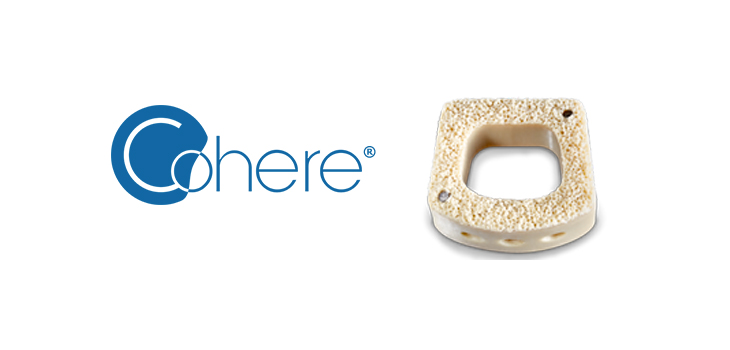
A total of 50 patients with degenerative cervical disc disease underwent anterior cervical discectomy and fusion (ACDF) using NuVasive’s Cohere cervical interbody fusion device. The company indicates that all patients experienced positive results.
“This interbody fusion device with Porous PEEK surface technology provided improved osseointegration and supported spinal fusion in single level and multi-level cervical fusions,” said study author Dr. J. Kenneth Burkus of the Hughston Clinic in Columbus, Georgia.
“Twelve-month clinical outcomes have demonstrated the efficacy and stability of the Cohere Porous PEEK interbody device and shown that it is a clinically viable implant alternative for achieving successful clinical and radiological outcomes in cervical spine fusion surgery, particularly in multi-level or revision surgeries where fusion rates are lower.”
According to the company, “During the course of the clinical study, there were 11 1-level, 23 2-level and 16 3-level fusions between C3 and C7. Patients came from all walks of life and with various comorbidities. Thirteen of them had previously had an unsuccessful anterior cervical fusion procedure.”
“It is notable that all patients who had revision surgery with Cohere achieved fusion six months after the surgery. At 12 months post-operative ACDF surgery, all 50 patients demonstrated improved motion, decreased neck pain and average disc height increased by more than 4 mm. In addition, each of them showed radiographic fusion.”
Matt Link, executive vice president, strategy, technology and corporate development for NuVasive, told OTW, “The study by Dr. Burkus demonstrated remarkable results with the Cohere Porous PEEK device in as little as six months with improved clinical outcomes and excellent fusion rates. We look forward to sharing these exciting findings with our surgeon and hospital customers. The Porous PEEK technology was designed for enhanced osseointegration and this study provides additional evidence of its clinical value.”
Author
React:
Discussion
This is a fascinating development. In my practice we've seen similar outcomes with the revised protocol. The key differentiator seems to be patient selection criteria. Has anyone else noticed the correlation with BMI thresholds?
Great point. I'd push back slightly on the conclusion, the sample size in the cited study is too small to draw population-level inferences. That said, the directional signal is compelling and worth a larger RCT.
We implemented a similar approach last year. Early results are promising but we're still gathering 12-month follow-up data. Happy to share our protocol if anyone is interested.
Join the conversation
Orthopedic professionals are discussing this. Sign in and upgrade to read every comment and add your voice.