
Researchers from Denmark and Germany have looked at the power of an investigational growth hormone (Sprifermin) and found something very interesting.
Sprifermin Grows Cartilage in OA Patients?
1 min read Premium comments
#osteoarthritisSecondary#knee#sprifermin
Their work, “Articular cartilage from osteoarthritis patients shows extracellular matrix remodeling over the course of treatment with Sprifermin (recombinant human fibroblast growth factor 18),” was published in the April 2018 edition of Osteoarthritis and Cartilage.
The authors wrote, “Full depth articular cartilage explants from OA patients (patients=5) were cultured for 70 days. Freshly prepared media with either Sprifermin (900, 450, 225 ng/mL), FGF18 (450 ng/mL), IGF-I (100 ng/mL, positive control) or placebo formulation (negative control) was added once weekly (explants/treatment/patient=2).”
Ditte Reker, Ph.D., with the department of biology at the University of Copenhagen in Denmark and co-author on the study told OTW, “Osteoarthritis [OA] is associated with gradual and progressive degradation and loss of the articular cartilage of the joint affected by the disease.”
“It is believed that preservation of the joint may prolong the survival of the joint and postpone the need for joint replacement. Sprifermin, an investigational growth hormone administrated intra-articularly into the affect joint, is being evaluated to determine if it will grow more cartilage and thereby extend the joint life.”
“Initial two-year results of a clinical trial conducted by Merck KGaA, Darmstadt, Germany, testing Sprifermin in OA patients showed that sprifermin indeed increased cartilage thickness in these patients.”
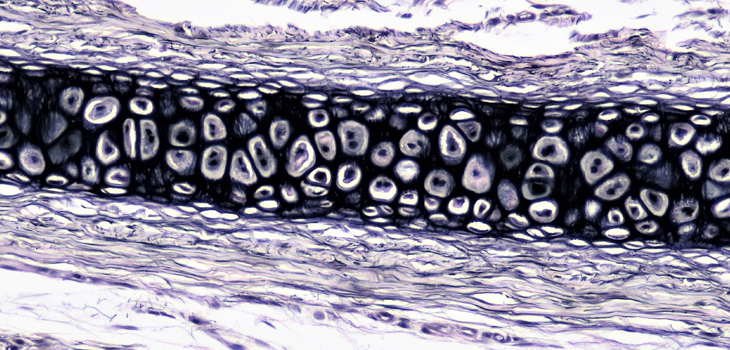
“To elucidate the molecular mode of action of these clinical observations, we conducted experiments in which we cultured cartilage in the presence of Sprifermin. We demonstrated that cartilage formation is initiated in a precise sequence of events in response to Sprifermin. Firstly, the cellular components of cartilage, the chondrocytes, proliferate, which secondly result in a real cartilage matrix production. This was quantified by PRO-C2 – a molecular biomarker of type II collagen formation, the main protein in cartilage.”
Author
React:
Discussion
This is a fascinating development. In my practice we've seen similar outcomes with the revised protocol. The key differentiator seems to be patient selection criteria. Has anyone else noticed the correlation with BMI thresholds?
Great point. I'd push back slightly on the conclusion, the sample size in the cited study is too small to draw population-level inferences. That said, the directional signal is compelling and worth a larger RCT.
We implemented a similar approach last year. Early results are promising but we're still gathering 12-month follow-up data. Happy to share our protocol if anyone is interested.
Join the conversation
Orthopedic professionals are discussing this. Sign in and upgrade to read every comment and add your voice.