
At the recent National Athletic Trainers’ Association’s (NATA) 69th Clinical Symposia & AT Expo, held in New Orleans between June 26 and June 28, 2018, one of the new studies presented suggests that patients with patellofemoral pain have lower subjective mental health and physical health than healthy individuals.
Physical and Mental Health Lower With Knee Pain
2 min read Premium comments
Secondary#mentalhealth#patellofemoralpain#physicalhealth
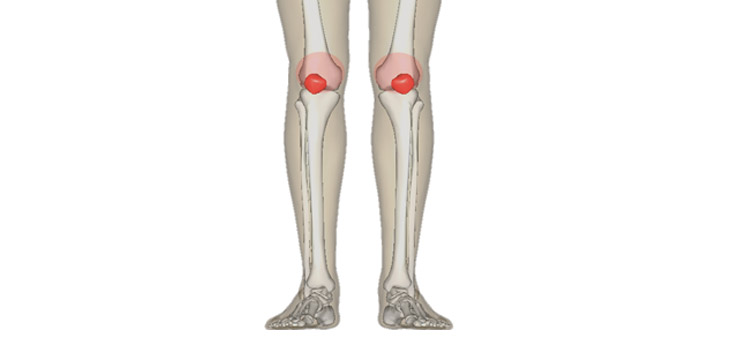
In their study, Susan Saliba, Ph.D., ATC, PT of the department of Kinesiology at the University of Virginia in Charlottesville, Virginia, and colleagues investigated how subjective physical and mental health and physical activity levels differ between individuals suffering from patellofemoral pain (PFP) and healthy individuals.
Saliba and her colleagues assessed the physical activity of 20 healthy individuals (15 female, 5 male) and 20 patients (15 females, 5 males) with patellofemoral pain over 14 consecutive days using a FitBit Charge HR. They were also asked to fill out a 12-time short-form healthy survey (SF-12). 8 subscales which included physical function (PF), role physical (RP), bodily function (BF), general health (GH), vitality (VT), social functioning (SF), role emotional (RE), and mental health (ME). PF, RP, BF, and GH combine to assess subjective physical health (PCS), and VT, SF, RE, and ME combine to assess subjective mental health (MCS).
According to the data, those with PFP took significantly fewer steps per day (Healthy: 13,169±1,000; PFP: 8,636±2,027; p < 0.001) than healthy individuals.
In addition, PFP individuals scored significantly higher on PF (Healthy: 100±0, PFP: 80±20.83, p<0.001), RP (Healthy: 100.0±0.0, PFP: 90.63±9.83, p<0.001), BP (Healthy: 100.0±0.0, PFP: 78.75±18.63, p<0.001), GH (Healthy: 91.0±7.54, PFP: 82.5±14.74, p=0.029), SF (100.0±0.0, PFP: 90.0±7.53, p<0.017) and RE (Healthy: 100.0±.00, PFP: 96.88±5.55, p<0.021).
The researchers concluded that a strong relationship between subjective physical and mental health and physical activity exists in individuals with PFP, and that mental and physical health statuses are strong determinants of physical activity of the PFP participants.
They recommend that clinicians assess SF-12 results in PFP pathological individuals as a quick and simple measure of subjective physical and mental health, and a strong indicator for true physical health.
Saliba told OTW, “This is a snapshot of a chronic pain problem and we found that young people do less physical activity than healthy matched controls. We also found that there was a relationship of emotional/behavioral inventory to physical activity. Neither scale was abnormally low, but they were substantially lower on both measures.”
She added, “This was part of a larger clinical trial looking at an electrical stimulation intervention-augmented rehabilitation trial on patella femoral pain patients. The randomized clinical trial had several limitations that often go with a rehabilitation program. Everyone did not do the same exercises—we tailored the program to the individual’s impairments; thus, the progression was not all the same, but it mimicked what happens clinically.
“For this study, the SF 12 is a scale that has been validated, but the owners of the scale do the data reduction for the instrument. This is similar to many psychological measures or personality inventories, but it’s not something that we are used to in typical patient reported outcomes for musculoskeletal injuries.”
“We need to start using physical activity as an outcome that is important for young people with musculoskeletal problems. We also need to find ways to increase physical activity, which may also help combat emotional factors. We didn’t show that it would help, but our future research will hopefully target this.”
Author
React:
Discussion
This is a fascinating development. In my practice we've seen similar outcomes with the revised protocol. The key differentiator seems to be patient selection criteria. Has anyone else noticed the correlation with BMI thresholds?
Great point. I'd push back slightly on the conclusion, the sample size in the cited study is too small to draw population-level inferences. That said, the directional signal is compelling and worth a larger RCT.
We implemented a similar approach last year. Early results are promising but we're still gathering 12-month follow-up data. Happy to share our protocol if anyone is interested.
Join the conversation
Orthopedic professionals are discussing this. Sign in and upgrade to read every comment and add your voice.