
How do we predict the presence of rheumatoid arthritis in at-risk patients and prevent it with early interventions?
Milestone Study Accurately Predicts Rheumatoid Arthritis
2 min read Premium comments
#rheumatoidarthritisSecondary#ra#annualcongressofrheumatology
These are the question researchers were asking in their recent study “Gene Signatures and Biomarkers Predict Onset of Rheumatoid Arthritis in At-Risk Individuals.” The study appears in the June 2018 Annual European Congress of Rheumatology.
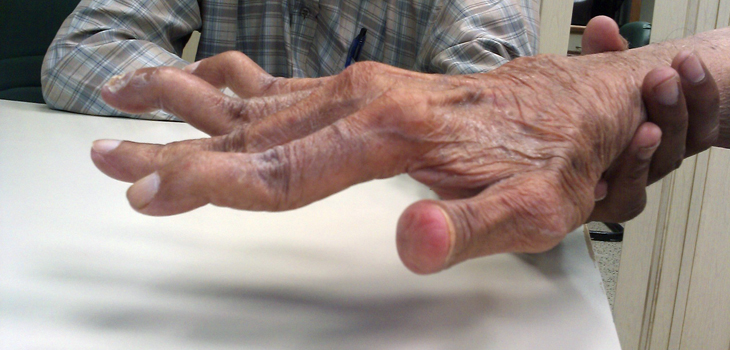
According to the researchers, “Rheumatoid arthritis (RA) is characterized by joint inflammation leading to destruction of bone and cartilage. Since structural joint damage is irreversible, early recognition and treatment is a key focus in an effort to halt the progression of the disease.”
“There is a phase before any evidence of RA where specific autoantibodies are present in the body. Individuals who have these antibodies are referred to as RA-risk, however only a subset of these will develop active disease in the short term.”
Co-author, Dr. Lisa van Baarsen, principal investigator at the Amsterdam Rheumatology and Immunology Center, told OTW, “The discovery that autoantibodies can be present years before the onset of clinical symptoms of RA enables us to study autoantibody positive individuals who are at risk of developing RA.”
“In patients with established disease the target tissue of RA, the synovial joints, is characterized by cellular infiltration and inflammation. Moreover, successful therapy decreases this synovial inflammation.”
“In the past, our department showed (PMID: 21177292; PMID: 24574210) that in autoantibody positive at-risk individuals there is no overt cellular infiltration present in the synovium.”
“In the current study we performed a so-called discovery-based approach to investigate at a genome-wide gene expression level (using microarrays) whether the synovium is altered at a molecular level before onset of RA.”
“Our molecular and microscopic studies show differences between those at-risk individuals who developed disease and those we did not. Our research study shows that already years before onset of clinical symptoms, the synovium is changing. This is important information, since this gives more insight into the pathogenesis of disease and may lead to the identification of new drug targets for preventive intervention”
“Now we can identify individuals at risk of developing RA and with better predictive biomarkers within reach, preventive medicine for RA may be a realistic development.”
“However, we first need to delineate the best drug targets for this preclinical phase of disease.”
“Investigating the target tissue of a disease is highly important in order to understand disease pathogenesis. A close collaboration between orthopedic surgeons and rheumatology researchers can be very helpful in obtaining tissues (e.g. synovium, bone and bone marrow) for research purposes.”
Author
React:
Discussion
This is a fascinating development. In my practice we've seen similar outcomes with the revised protocol. The key differentiator seems to be patient selection criteria. Has anyone else noticed the correlation with BMI thresholds?
Great point. I'd push back slightly on the conclusion, the sample size in the cited study is too small to draw population-level inferences. That said, the directional signal is compelling and worth a larger RCT.
We implemented a similar approach last year. Early results are promising but we're still gathering 12-month follow-up data. Happy to share our protocol if anyone is interested.
Join the conversation
Orthopedic professionals are discussing this. Sign in and upgrade to read every comment and add your voice.