
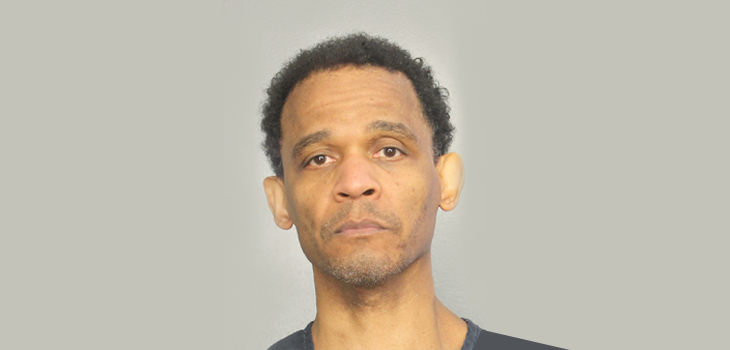
Johnny Benjamin, M.D., Florida’s “Breaking Bad” spine surgeon is going to prison for the rest of his life.
Life Imprisonment for Florida Spine Surgeon
2 min read Premium comments
Secondary#spinesurgeon#johnnybenjamin
On July 6, 2018, District Judge William P. Dimitrouleas laid down the life sentence and said he hoped the sentence would deter other professionals with money problems from being tempted into drug-dealing.
Benjamin’s sentencing came after being convicted last April for the 2016 fentanyl overdose death of his patient, Margaret “Maggie” Crowley.
The jury said Benjamin was guilty of conspiracy to possess with intent to distribute the narcotic fentanyl. He was also convicted of four other drug-related charges linked to Crowley’s death.
After the sentencing, Assistant U.S. Attorney John McMillan, who prosecuted the case, said, “There could be no more serious offense than to kill another person…He as a doctor should have known better.”
The Investigation
We reported last November that Benjamin had been indicted and charged with distributing, and possibly manufacturing counterfeit oxycodone pills.
The feds began investigating him in 2016. Informants who had bought counterfeit oxycodone pills from Benjamin, led federal agents to the surgeon.
According to a sworn statement from a federal agent, when one of informants told Benjamin about Crowley’s death, he allegedly said Crowley was just another “page in a large stack.” The informant also told the feds that in 2016 Benjamin began researching synthetic opioids and talked about manufacturing them himself.
Prosecutors proved that Benjamin was the source of the pills responsible for Crowley’s death. Investigators also uncovered a distribution network implicating Benjamin in the manufacture and distribution of counterfeit oxycodone pills outside the South Florida area.
In one bizarre episode, the federal complaint cites an October 6, 2017 incident when Benjamin tried to board a plane to Philadelphia carrying thousands of counterfeit pills supplied by a DEA informant for $16,000.
He arrived at the Orlando Melbourne International Airport wearing his scrubs and carrying thousands of blue pills in his carry-on bag. Airport police confiscated the pills and Benjamin returned with a prescription written that day to retrieve what he called his “cancer medication.”
According to a biography on www.drjohnnybenjamin.com, Benjamin grew up in Houston, Texas, and graduated from Baylor University.
He completed his internship and residency at Temple University Hospital in Pennsylvania and had a fellowship at the Florida Spine Institute in Clearwater in 1997, according to Department of Health records. Although he’s been in prison since October, the Palm Beach Post reported that his medical license remains active.
Benjamin’s lawyer reportedly said he planned to file an appeal, although he did not reveal the scope of the potential appeal.
The Palm Beach Post reported that Zachery Stewart and Kevan Slater, the two informants who led the DEA to Benjamin, will be sentenced later in July.
Author
React:
Discussion
This is a fascinating development. In my practice we've seen similar outcomes with the revised protocol. The key differentiator seems to be patient selection criteria. Has anyone else noticed the correlation with BMI thresholds?
Great point. I'd push back slightly on the conclusion, the sample size in the cited study is too small to draw population-level inferences. That said, the directional signal is compelling and worth a larger RCT.
We implemented a similar approach last year. Early results are promising but we're still gathering 12-month follow-up data. Happy to share our protocol if anyone is interested.
Join the conversation
Orthopedic professionals are discussing this. Sign in and upgrade to read every comment and add your voice.