
Kyocera Corporation’s Aquala technology has received Japan’s “Prize of the Minister of Economy, Trade and Industry” during the 2018 National Invention Awards held in Tokyo June 12 by the Japan Institute of Invention and Innovation (JIII).
Kyocera’s Aquala Hip Wins Japan’s Top Tech Award
2 min read Premium comments
Secondary#kyoceracorporation#hip#aquala
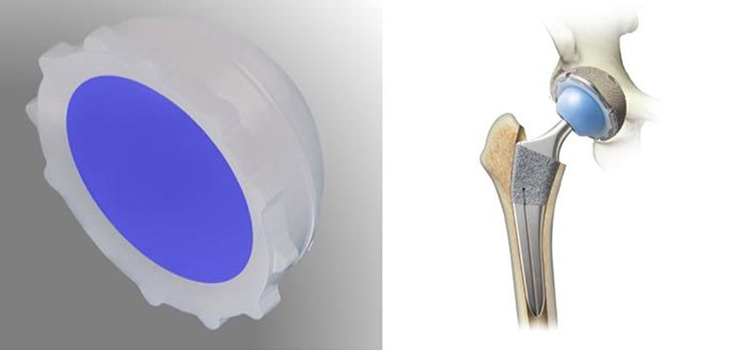
The honor recognizes Kyocera’s Aquala surface-processing technology, which has been demonstrated to cut artificial hip joint wear by 99% and was developed in collaboration with The University of Tokyo.
According to the company, “…Kyocera developed its Aquala technology to create an exceptionally low-friction bearing surface on the acetabular side of the joint, which couples with diamond-polished ceramic on the femoral side. Kyocera’s Aquala technology represents the first Japan-market use of the biocompatible material PMPC to create a nanometer-scale hydrophilic polymer layer with functions similar to human articular cartilage in the implant’s acetabular liner.”
Surgeons have implanted approximately 45,000 total hip replacements using Kyocera’s Aquala technology since it was approved by Japan’s Ministry of Health, Labor and Welfare in 2011.
Shigeru Satake, manager of global business development section, medical division, at Kyocera, told OTW, “We are honored that the Aquala technology which we developed in collaboration with The University of Tokyo was selected for the prestigious ‘Prize of the Minister of Economy, Trade and Industry’ during the 2018 National Invention Awards.”
“This prize is designed to contribute to Japan’s technological and industrial development. We aim to contribute to extend the life expectancy of artificial hip joints through continuously providing the Aquala surface-modification technology developed in Japan to clinical sites.”
“We plan to expand the technology to the U.S. market as well as displaying it at the AAOS [American Academy of Orthopaedic Surgeons] to be held during next spring.”
“It has been a big challenge of total hip arthroplasty (THA) to reduce postoperative complications such as aseptic loosening of the artificial hip joint. Aquala technology, which reduces microscopic ‘wear debris,’ helps reduce unwanted immune response. Therefore, we expect that the Aquala technology will contribute to longer life expectancy in artificial hip joints.”
“When we subjected artificial joints with Aquala technology to a walking test involving 5,500 paces per day for 15 years by utilizing an artificial hip joint simulator, the results showed that the artificial hip joint with Aquala technology experienced a 99% reduction in wear debris compared to conventional product.”
“Furthermore, in general, the applications of the novel biomaterial used for artificial joints are gradually expanded with efficiency and safety confirmed in other clinical tests although we sincerely apologize that we cannot disclose the details of the test. In the case of Aquala, this improved life expectancy has resulted in a rapid expansion in the utilization of these artificial hip joints when compared to other conventional products.”
Author
React:
Discussion
This is a fascinating development. In my practice we've seen similar outcomes with the revised protocol. The key differentiator seems to be patient selection criteria. Has anyone else noticed the correlation with BMI thresholds?
Great point. I'd push back slightly on the conclusion, the sample size in the cited study is too small to draw population-level inferences. That said, the directional signal is compelling and worth a larger RCT.
We implemented a similar approach last year. Early results are promising but we're still gathering 12-month follow-up data. Happy to share our protocol if anyone is interested.
Join the conversation
Orthopedic professionals are discussing this. Sign in and upgrade to read every comment and add your voice.