
At the recent National Athletic Trainers’ Association’s (NATA) 69th Clinical Symposia & AT Expo, held in New Orleans between June 26 and June 28, 2018, one of the new studies presented—from the Cincinnati Children’s Hospital—suggests that younger children are not more susceptible to the negative effects of repetitive head impacts than older adolescents, as currently hypothesized.
Concussive Impact May Not Be Worse for Kids
2 min read Premium comments
Secondary
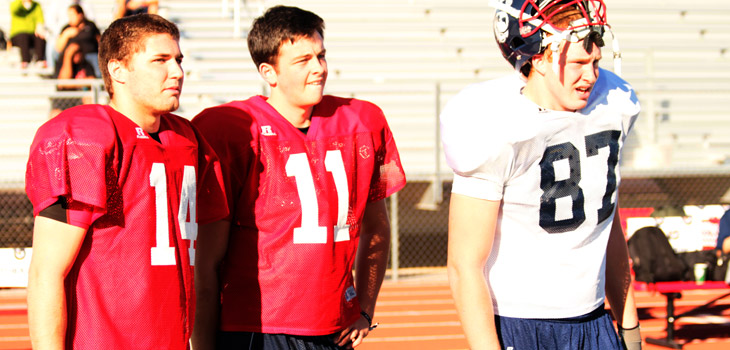
In their study, “Brain white matter alterations associated with a single season of competitive football: A comparison of youth and high school football,” Kim Barber Foss, MS, ATC, LAT, certified athletic trainer and faculty member in the Master of Science in Health Science program at the Rocky Mountain University of Health Professions in Provo, Utah, and her colleagues compared the white matter (WM) integrity and total head impacts of a cohort of youth football players (YFB) relative to varsity high school football players (HS) over the course of one competitive season.
A total of 12 YFB (13.08±0.64 years) and 21 HS (17.5±0.78 years) participated in the study. Magnetic resonance imaging sessions were completed preseason and postseason and head impact was recorded using the GForce Tracker accelerometer device attached to the inside of each football helmet. In addition, differences in whole brain axial diffusivity (AD), a measure of WM integrity based on diffusion tensor imaging, and total impacts, between HS and YFB at preseason and postseason were recorded.
According to the data, the HS group had more total head impacts compared to the YFB group (p < .001). In high school football athletes, significant pre- to post-season AD reduction (p <0.05, corrected) was found in extensive WM areas.
The percentage of AD reduction within these significant area WM areas in the HS group (2.43±1.01%) was significantly greater than the YFB group (0.37±1.27%, t=5.13,df=31,p <0.0001). Significant pre- to post-season AD reduction was also found in the YFB group (p <0.05, corrected) but was limited in size of the regions. Within these areas, the percentage of AD reduction in the YFB group (3.35±1.58%) was significantly greater than the HS group (0.50±2.84%, t=3.71,df=31,p=0.0008).
One limitation to the study is the sample size. Future studies are needed to investigate the age dependence (e.g. myelination) and region specific vulnerability of WM to head impact exposure in concussion and should include data over multiple seasons with a larger sample size.
“The biggest take away was that our data did not confirm the current speculation that younger children are more susceptible to negative effects of repetitive head impacts when compared to older adolescents,” Foss told OTW.
She added, “We shouldn’t necessarily stop kids from playing a sport as exercise is very important, but we should focus on reducing exposure to head impacts. Having access to athletic trainers and sports medicine doctors is key, both in helping to support injury prevention, but also fully rehabilitating an injured athlete before being allowed to return to sport.”
Author
React:
Discussion
This is a fascinating development. In my practice we've seen similar outcomes with the revised protocol. The key differentiator seems to be patient selection criteria. Has anyone else noticed the correlation with BMI thresholds?
Great point. I'd push back slightly on the conclusion, the sample size in the cited study is too small to draw population-level inferences. That said, the directional signal is compelling and worth a larger RCT.
We implemented a similar approach last year. Early results are promising but we're still gathering 12-month follow-up data. Happy to share our protocol if anyone is interested.
Join the conversation
Orthopedic professionals are discussing this. Sign in and upgrade to read every comment and add your voice.