
Two studies, at two different institutions, show that a type of blood antibody everyone is born with (a single chain variable region fragment of the IgM E06-E06-scFv) protects against osteoporosis.
Certain Blood Antibody Mitigates Osteoporosis
2 min read Premium comments
#osteoporosisSecondary#osteopenia#bone
Elena Ambrogini, M.D., Ph.D.—an assistant professor in the Division of Endocrinology and Metabolism, part of the Department of Internal Medicine in the University of Arkansas Medical Sciences (UAMS) College of Medicine, and a staff physician at CAVHS (Central Arkansas Veterans Healthcare System)—conducted the study with the Center for Osteoporosis and Metabolic Bone Diseases.
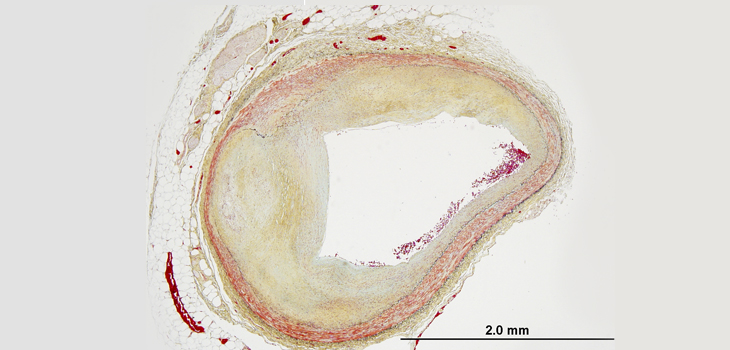
Ambrogini used a genetically modified mouse developed at the University of California San Diego (UCSD), where researchers conducted a related study that showed this protein also has a beneficial effect on cardiovascular disease, specifically atherosclerosis, in which plaque builds up inside the arteries.
“Together, the two studies provide proof of principle for a new therapy for two very common diseases, osteoporosis and atherosclerosis, simultaneously,” Ambrogini said. “In the case of osteoporosis, this would be a new anabolic therapy, meaning that it can build new bone as opposed to only preventing the loss of old bone.”
In a Nature paper, Dr. Ambrogini wrote: “We used mice overexpressing the antigen recognition portion of E06 (E06-scFv), or IK17-scFv, which block the effects of PC-OxPL or MDA, respectively. We found that E06-scFv transgene increases cancellous bone mass and attenuates the loss of cortical bone mass caused by high fat diet in the LDL-receptor knockout model of atherosclerosis.”
The UCSD researchers found that the same antibodies strongly protect against atherosclerosis and cardiovascular disease.
Robert L. Jilka, Ph.D., a co-author on the study and professor of medicine at UAMS, has been studying the relationship between atherosclerosis and osteoporosis for about 10 years. He said, “We have known for quite some time that there was some sort of connection between osteoporosis, atherosclerosis and the high-fat diet. Investigators all over the world have been studying this for a while without much success as to the reason for this connection.”
“Together, the two studies provide proof of principle for a new therapy for two very common diseases, osteoporosis and atherosclerosis, simultaneously,” Ambrogini said.
The findings of the companion studies were published June 6—the UAMS study in Nature Communications (“Oxidation-specific epitopes restrain bone formation”) and the UCSD study in Nature (”Oxidized phospholipids are proinflammatory and proatherogenic in hypercholesterolaemic mice”).
Author
React:
Discussion
This is a fascinating development. In my practice we've seen similar outcomes with the revised protocol. The key differentiator seems to be patient selection criteria. Has anyone else noticed the correlation with BMI thresholds?
Great point. I'd push back slightly on the conclusion, the sample size in the cited study is too small to draw population-level inferences. That said, the directional signal is compelling and worth a larger RCT.
We implemented a similar approach last year. Early results are promising but we're still gathering 12-month follow-up data. Happy to share our protocol if anyone is interested.
Join the conversation
Orthopedic professionals are discussing this. Sign in and upgrade to read every comment and add your voice.