
With eight more cases preparing for trial, can 3M keep winning?
3M Wins the First Round in Landmark Bair Hugger Lawsuit
7 min read Premium comments
#fda#lawsuits#3m
Or is Bair Hugger destined to be on the trash heap of former medical products?
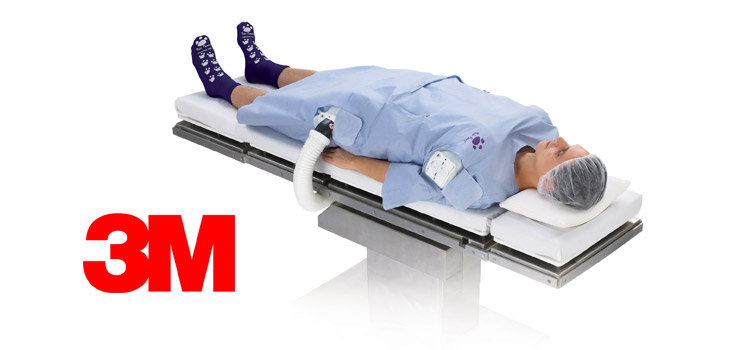
With over 4,500 lawsuits filed by patients, things are certainly “heating” up for its manufacturer, 3M. This forced-air warming system is designed to prevent hypothermia and helps patients maintain normal core temperature throughout surgical phases. It is comprised of a central warming unit that sends warm air through a hose into a disposable blanket, which is draped around or under the patient. The blanket also has drain holes where excess fluids can pass through onto a linen underneath.
3M says that warming blanket system helps avoid a “cascade of negative outcomes associated with unintended hypothermia, including increased risk of SSIs (surgical site infections), blood loss and transfusion requirements, adverse cardiac events, decreased drug metabolism, and shivering and thermal discomfort” to patients.
The FDA cleared the first Bair Hugger warming system in 1987 and has issued numerous clearances for it since. The Bair Hugger is used in 4 out of 5 hospitals and on over 200 million patients across the globe. But despite its popularity, legal problems are caving in on Bair Hugger blanket.
One of the first patients who filed a lawsuit in 2011 sought more than $1 million in damages against 3M after he developed an infection following his hip replacement surgery, which required 15 follow up operations.
Another individual developed a MRSA (Methicillin-resistant Staphylococcus aureus) infection after her knee replacement surgery and needed 27 additional operations. Another required leg amputation after multiple unsuccessful revision surgeries to treat an infection formed after a total knee arthroplasty. The list continues on.
Every patient suing 3M had serious complications or infections following surgeries that involved the Bair Hugger blanket.
But, as we just saw in the May 2018 case in Minneapolis, Minnesota, juries may have hard time believing that Bair Hugger is unreasonably dangerous AND that a reasonably safe alternative exists.
The Plaintiff’s Case
Attorneys for the injured patients argue scientific research shows the device can spread airborne contaminants while used on surgical patients. Dr. Scott D. Augustine, the inventor of the Bair Hugger system, even testified against the product, claiming that the warming unit can substantially disrupt the flow of sterile air inside an operating room. However, 3M maintained its product actually prevents infections and provides better surgical outcomes for patients. Despite the ensuing litigation, 3M consistently reassured the public that the Bair Hugger is safe and effective.
Hospital systems and doctors are often included as defendants in the Bair Hugger lawsuits. Patients are typically unaware what led to their injury, so they name all entities involved as responsible parties. After the complaint survives the initial technical and court procedural stages, it moves forward to the discovery process, which allows the parties to dig up all relevant facts to the case. Attorneys interview doctors and support staff in depositions regarding the diagnoses, treatment, procedures, and other actions they took related to the patient. This helps establish whether medical professionals engaged in any deviant behavior or misuse of medical products or services on the injured patients.
However, if appropriate protocols were followed, the spotlight turns on product malfunctions. Different parties can be legally responsible for defective products. The designer of a product may be held responsible if the product is defectively designed. The manufacturer of the product may be responsible if the product is defectively manufactured. And the maker, manufacturer, and seller of a product may all be responsible if a defective warning fails to inform the consumer of the product’s risks.
The Defense’s Case
In the Bair Hugger cases, the defense is arguing—so far successfully—that there has actually been no determination of what caused the patients’ infections.
Experts for the defense have argued a wholly independent and intervening incident likely occurred following any act or omission by the physician which breaks any “causal link.” Another line of defense is to argue that patient injuries resulted from pre-existing medical conditions or disabilities, for which they exercised no control.
Finally, the defense is also claiming that the patients assumed any and all risks associated with the Bair Hugger device, barring them from recovery.
Plaintiff patients, therefore, have had no choice but to dismiss doctors from their lawsuits. Orthopedic physicians that followed medical professional standards but still found themselves tangled up in Bair Hugger litigation, probably don’t have much to fret about.
Did Bair Hugger Cause Infections?
The core complaint is that Bair Hugger injured patients. The warming system, it is alleged, contracted dirty air particles and forced them into the surgical site causing an infection. Patients’ attorneys have relied on computer animations and simulations to show forced-air warming techniques can circulate air full of bacteria and other contaminants into the surgical site. The use of computer-generated animations and simulations are increasingly common in product liability cases in today’s courtrooms since they help jurors understand complex issues and provide a visual explanation of the product’s malfunctions or defects.
One of the plaintiff’s in the Bair Hugger case also offered a study published in the Journal of Bone and Joint Surgery showing the blanket system created a “significant” increased risk for deep-joint infections due to forced-air warming based upon an experiment with a mannequin.
3M, however, pointed out that the same study examined 1,400 real-world patients with not a shred of evidence the Bair Hugger system harmed any of them.
Enter the Food and Drug Administration
With Bair Hugger lawsuits piling up, the FDA attempted to “clear the air” with healthcare providers in 2017 and recommended patient warming devices, including forced-air warming systems, for surgical procedures when clinically warranted.
The FDA realized some providers and patients discontinued forced-air warming tactics, including the Bair Hugger device, in surgeries due to the mounting lawsuits. The FDA proclaimed that after a review of available data, it was unable to find a consistently reported association between forced-air warming and infections. Scientific research also defended forced-air warming techniques. A review of past studies published in the Journal of Bone and Joint Surgery reiterated, “forced air warming can impact [air] flow under certain very specific conditions, but any actual clinical impact on surgical site infections must be considered unproven at this time.”
One thing is increasingly clear: injured patients are relying on the possibility that the Bair Hugger blanket can infiltrate contaminated air.
However, this “possible effects” theory is largely insufficient in showing the Bair Hugger warming device is hazardous to surgical patients.
The true test of underlying medical product liability has been whether the Bair Hugger blanket “more likely than not” caused the patient’s exacerbated injuries following his or her use of the device.
So far, however, the plaintiff’s attorneys have not been able to meet this standard.
Bad News for Bair Hugger Litigants
In January of this year, a Minnesota state court dismissed 61 lawsuits claiming the warming device injured patients. In its decision, the court asserted “there is no generally accepted scientific evidence—and plaintiffs offer none—that the risk of infection associated with [forced air warming] is greater than that associated with patients who are not warmed during surgery.’’ The court also said there is no scientific evidence that other warming devices used for the same purposes have a lesser infection rate than those with forced-air warming. The court called out the truth: there is no verifiable link that the Bair Hugger blanket warming system actually caused the patients’ infections and further injuries. The outlook isn’t looking good for Bair Hugger litigants as the cause for their complaints are emerging as baseless. Until a patient can show the Bair Hugger warming system directly or more than likely caused their injury, lawsuits against 3M will be unsuccessful.
More Dirt to the Story
But there’s more dirt to this story than just dirty air.
In court documents, 3M asserts that Augustine “was the original inventor and developer of the Bair Hugger patient warming system. After being forced out of his own company, he pled guilty to Medicare fraud, developed a competing ‘HotDog’ warming system, and immediately began a prolific, sustained and often-concealed campaign to attack the Bair Hugger system.” In its opinion, the court acknowledge that Augustine “blatantly and unapologetically threatened Defendants with negative ‘rhetoric’ and ‘studies’ with pre-determined findings to pursue a business advantage.” Come to find out, one of the “experts” that testified against his own product was actually a disgruntled inventor seeking one serious vendetta.
And What About the Recalls?
However, the Bair Hugger warming device has not always been foul-proofed. In January 2018, 3M recalled 165,000 Bair Hugger warming blankets for a design defect. Some redesigned blankets failed to fully inflate and 3M warned that the partial inflation could prevent proper warming. One patient suffered hypothermia during surgery when a Bair Hugger blanket failed to fully inflate. Other than this mishap, there is no proof that the Bair Hugger warming blanket threatens patients.
Why So Many Lawsuits?
But if scientific research, the FDA, and the courts are standing with Bair Hugger, why are there so many lawsuits?
When it comes to product liability and personal injury lawsuits, lawyers are looking to strike gold. In the well-known McDonald’s coffee case, an elderly woman suffered severe burns from a scalding-hot cup of coffee from McDonald’s and filed a product liability lawsuit. Initially she sought out the costs for her medical expenses, but McDonald’s refused to pay up. A jury eventually awarded the scorched victim the $200,000 she requested for medical and other compensatory damages, in addition to $2.7 million in punitive damages.
In another case, a jury concluded that Merck had intentionally misled the FDA regarding the safety of a painkiller known as Vioxx. The plaintiff suffered from a heart attack after using the pharmaceutical product for several years. He was ultimately awarded $4.5 million in compensatory and punitive damages. With any chance to win big, lawsuits alleging product-related injuries will likely continue for Bair Hugger.
The Key Takeaways
Every orthopedic physician should pay attention to medical products that are at the center of lawsuits. Negative publicity from those lawsuits may come back to you in the form of patient concerns. As for Bair Hugger, stay tuned, for sure.
Author
React:
Discussion
This is a fascinating development. In my practice we've seen similar outcomes with the revised protocol. The key differentiator seems to be patient selection criteria. Has anyone else noticed the correlation with BMI thresholds?
Great point. I'd push back slightly on the conclusion, the sample size in the cited study is too small to draw population-level inferences. That said, the directional signal is compelling and worth a larger RCT.
We implemented a similar approach last year. Early results are promising but we're still gathering 12-month follow-up data. Happy to share our protocol if anyone is interested.
Join the conversation
Orthopedic professionals are discussing this. Sign in and upgrade to read every comment and add your voice.