
On May 22, 2018, Stryker Orthopedics issued a Product Safety Notification related to the company’s LFIT Anatomic CoCr V40 Femoral Heads.
Stryker Safety Notification for Certain Femoral Heads
1 min read Premium comments
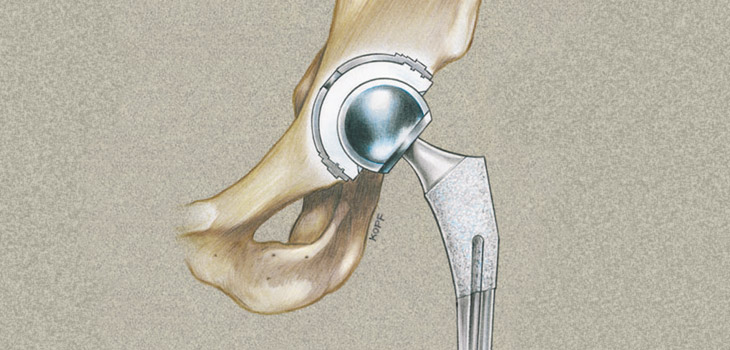
#strykerSecondary#femoralheads
The company said it received “a higher than expected number” of complaints documenting femoral head/hip stem dissociation for certain sizes of LFIT heads manufactured prior to March 4, 2011.
The company added that with respect to the likelihood occurrence of the dissociation, the complaint rate is less than 0.3%.
Specific products within the notification are included in Catalog Numbers: 6260-9-(036, 136, 236, 336, 040, 140, 044, 144) with head diameters of 36mm, 40mm and 44mm.
The following clinical conditions potentially related to the dissociation included:
- Dislocation
- Pain associated with implant loosening
- Peri-prosthetic fracture
- Revision to alleviate hazardous situation
- Leg length discrepancy
- Loss of mobility secondary to hip-stem trunnion fracture or femoral head/hip stem dissociation
- Pain requiring revision surgery
- Inflammatory response
- Adverse local tissue reaction (ALTR)
The notification stated that patients should continue to be followed per the normal protocol established by the surgeon. There are no recommended changes to the frequency of the standard follow-up care protocol.
Hospital and surgeons are required to inform products users of this notification. The product is not required to be returned.
Stryker established a dedicated call center at 888-644-2548.
Author
React:
Discussion
This is a fascinating development. In my practice we've seen similar outcomes with the revised protocol. The key differentiator seems to be patient selection criteria. Has anyone else noticed the correlation with BMI thresholds?
Great point. I'd push back slightly on the conclusion, the sample size in the cited study is too small to draw population-level inferences. That said, the directional signal is compelling and worth a larger RCT.
We implemented a similar approach last year. Early results are promising but we're still gathering 12-month follow-up data. Happy to share our protocol if anyone is interested.
Join the conversation
Orthopedic professionals are discussing this. Sign in and upgrade to read every comment and add your voice.