
A multicenter, soon-to-be-published study has examined the long-term effects of acromioplasty to see whether it had an effect on rotator cuff re-tear or on patient-reported outcomes.
New Study Quantifies Long-Term Acromioplasty Outcomes
2 min read Premium comments
#rotatorcuffSecondary#shoulder#acromioplasty
The authors wrote, “Between 2007-2011, prospectively-enrolled patients undergoing arthroscopic repair for full-thickness rotator cuff tears were previously randomized into either acromioplasty or non-acromioplasty groups. Patients who’d died or had advanced neurologic conditions, or subsequent shoulder arthroplasty were excluded.”
“The investigators obtained baseline and long-term follow-up questionnaires, including the American Shoulder and Elbow Surgeons (ASES), Simple Shoulder Test (SST), University of California-Los Angeles (UCLA), Visual Analog Scale (VAS) for pain, and Constant scores. The investigators also recorded rates of symptomatic re-tear, revision rotator cuff surgery, or secondary reoperation.”
Brian R. Waterman, M.D., associate professor in the Department of Orthopaedic Surgery at Wake Forest University School of Medicine and co-author on the study told OTW, “Many surgeons suggest that atraumatic rotator cuff tears likely occur from a combination of intrinsic and extrinsic risk factors.”
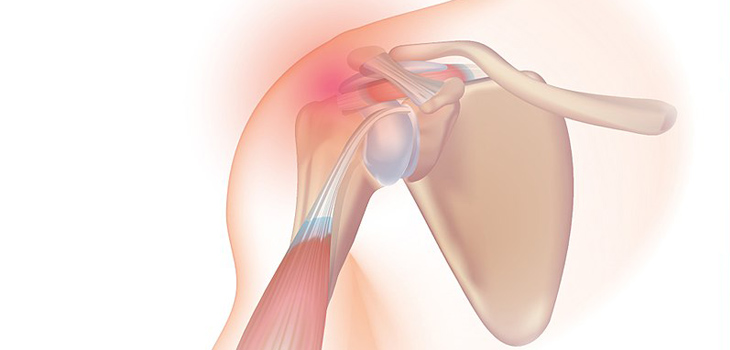
“On the intrinsic side, tendon degeneration, poor blood supply, and changes occur in the underlying biology with aging. Outside of the tendon, external factors may occur due to mechanical abrasion on vulnerable areas of the rotator cuff, and this can occur due to prominent subacromial spur formation or calcified soft tissue (e.g. coracoacromial ligament), selective acromial morphology, muscle imbalance, or abnormal motion around the shoulder.”
“When we encounter a symptomatic rotator cuff tear that is either painful or associated with poor function, we often attempt to modify these risk factors, with exercises, physical therapy, and if unresponsive, surgical treatment.”
“Despite the evolution in arthroscopic techniques and implants for arthroscopic rotator cuff repair, rotator cuff re-tear is not uncommon, with large to massive tears associated with a 20-94% risk of reinjury.”
“The current literature is mixed on the added value of subacromial decompression or acromioplasty with rotator cuff repair, but only a few studies have examined its effects at longer-term follow-up to see whether it had an effect on rotator cuff re-tear or patient-reported outcomes.”
“Interestingly, in our prospective randomized control trial, we found that routine subacromial decompression with arthroscopic rotator cuff repair offered no significant benefit in patient-reported outcomes or rates of re-tear when compared with rotator cuff repair alone.”
“Even after analyzing type III acromial morphology, or the so-called ‘hooked’ acromion that creates more rotator cuff abrasion with overhead motion, we found no difference in rates of re-tear. However, there were likely an inadequate number of patients with type III acromial morphology from the initial patient enrollment.”
“While our data suggests that routine acromioplasty may not be necessary in all symptomatic rotator cuff repairs, we are hesitant to state that subacromial decompression has no value in the face of rotator cuff tear.”
“For atraumatic tears with evidence of mechanical abrasive wear, type III acromial morphology, and tears with compromised tissue quality, large size, or extensive retraction, subacromial decompression may still be of value.”
“Not only does this decrease the risk of mechanical abrasion at the site of rotator cuff repair during early tissue remodeling, it may also contribute important biologic factors necessary for reproducible healing. Larger clinical series are likely warranted to better identify selected subgroups that may significantly benefit from concomitant subacromial decompression.”
mage Source attributed to: https://www.injurymap.com/free-human-anatomy-illustrations
Author
React:
Discussion
This is a fascinating development. In my practice we've seen similar outcomes with the revised protocol. The key differentiator seems to be patient selection criteria. Has anyone else noticed the correlation with BMI thresholds?
Great point. I'd push back slightly on the conclusion, the sample size in the cited study is too small to draw population-level inferences. That said, the directional signal is compelling and worth a larger RCT.
We implemented a similar approach last year. Early results are promising but we're still gathering 12-month follow-up data. Happy to share our protocol if anyone is interested.
Join the conversation
Orthopedic professionals are discussing this. Sign in and upgrade to read every comment and add your voice.