
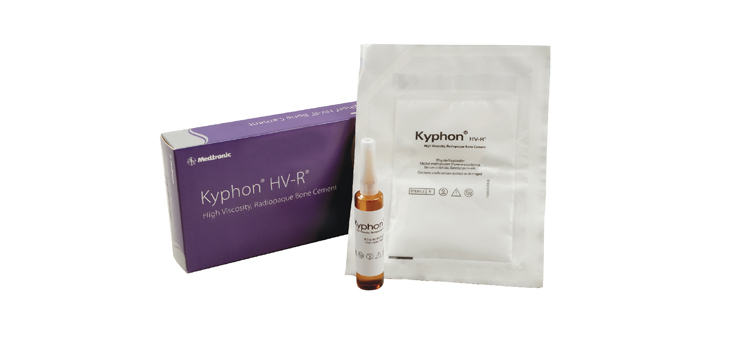
Medtronic plc has received a second FDA 510(k) clearance to use its Kyphon HV-R bone cement in the sacral vertebral body using sacral vertebroplasty or sacroplasty. The first clearance of the cement was for use in treating vertebral compression fractures.
Medtronic’s Kyphon Bone Cement Cleared for Sacral Use
2 min read Premium comments
#fdaSecondary#vertebroplasty
According to FDA filings, the cement is indicated for the treatment of pathological fractures of the vertebral body due to osteoporosis, cancer or benign lesions using kyphoplasty or vertebroplasty procedures. Pathologic fractures may include a symptomatic vertebral body microfracture without obvious loss of vertebral body height.
The FDA clearance stated the cement has the same fundamental scientific technology as the predicate, Kyphon Xpede Bone Cement cleared in 2015. The agency took two months to grant clearance.
The cement is provided as a two-component system.
“The powder component consists of a PMMA copolymer (polymethylmethacrylate/methyl-methacrylate-styrene copolymer) with barium sulfate as a radiopacifier and benzoyl peroxide as an initiator.”
“The liquid component consists of methylmethacrylate monomer, with the addition of hydroquinone as a stabilizer and N,N-dimethyl-p-toluidine as a promoter. The powder and liquid components are mixed prior to use.”
Thomas Andreshak, M.D., of Mercy St. Vincent Medical Center and St. Luke’s Hospital, Maumee, Ohio, said “the new indication for the HV-R cement, long with the Xpede bone cement, “will provide another excellent option to help patients.”
According to the company, “sacral insufficiency fractures (SIFs) are a common cause of debilitating back pain.”
“SIFs mimic the symptoms of lumbar spine pathology. Studies show more than two-thirds of patients diagnosed with SIFs aren’t able to associate their pain with a traumatic event. As a result, physicians often prescribe conservative treatment, including physical therapy and prolonged bed rest.”
“These patients report 20-45-day inpatient stays at the hospital, and prescription narcotic use associated with pain from untreated sacral insufficiency fractures, which are significant expenses to the healthcare system and result in lost productivity.”
“Patients treated with bed rest are at increased risk of pulmonary embolism and DVT, as well as further muscle atrophy and bone loss.”
Jeff Cambra, vice president and general manager of Medtronic’s Interventional Pain Therapies business, said that the new indication, “allows us to continue to make an impact on vertebral compression fracture and sacral insufficiency diagnosis treatment in the U.S. by giving physicians options to deliver the best clinical solutions to their patients.”
Author
React:
Discussion
This is a fascinating development. In my practice we've seen similar outcomes with the revised protocol. The key differentiator seems to be patient selection criteria. Has anyone else noticed the correlation with BMI thresholds?
Great point. I'd push back slightly on the conclusion, the sample size in the cited study is too small to draw population-level inferences. That said, the directional signal is compelling and worth a larger RCT.
We implemented a similar approach last year. Early results are promising but we're still gathering 12-month follow-up data. Happy to share our protocol if anyone is interested.
Join the conversation
Orthopedic professionals are discussing this. Sign in and upgrade to read every comment and add your voice.