
The most common knee surgery performed on people over 65 is repair of torn meniscus cartilage.
Efficacy of Meniscus Knee Surgery Questioned
2 min read Premium comments
#kneearthroplastySecondary#meniscusrepair
The procedure costs up to $10,000 a patient and, according to some surgeons, is largely a waste of time and money and may turn out to be harmful to the patient.
According to medical research writer Tim Mullaney, research suggests that, in many cases, this type of surgery is simply not effective.
“It’s known that this procedure is often done without strong evidence; I don’t think it’s well known that this is one of the most common surgeries done in the U.S.,” said Martin Makary, a professor of health policy at Johns Hopkins Medicine in Baltimore and author of a recent study in the Journal of the American Medical Association Surgery.
“We not only described it, we looked at it in a population that every American pays for (through Medicare). That’s a price tag and a context I’m not sure people have really calculated.”
David Altchek, an attending orthopedic surgeon at New York’s Hospital for Special Surgery and the medical director for the New York Mets points out what may be the cause of some confusion, even among medical practitioners.
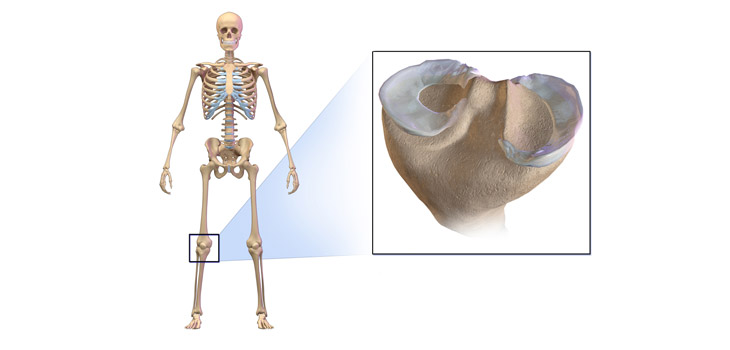
There are two kinds of torn meniscus cartilage.
Altchek, points out that only one of the two kinds of tears, the much less common one, responds to surgery.
The cartilage damage that bothers older patients is usually articular cartilage. This is found on the surface of bones in the knee and when it is damaged or worn out it produces a dull ache. An estimated 750,000 such procedures are performed each year, accounting for nearly two-thirds of orthopedic knee arthroscopy procedures in older patients.
Meniscal cartilage functions more like a pad between joints and when it is damaged it produces a sharp pain. This is especially true if the injury takes place all at once. For many patients it’s not their age but the presence of arthritis that makes the surgery ineffective
The cartilage that wears out in seniors is a different kind of tissue than what is damaged in acute injuries—the cartilage that bothers older patients is usually articular cartilage, while younger patients injure meniscal cartilage.
Arthroscopic procedures for acute injuries are effective on younger patients and are often done in conjunction with physical therapy to rebuild strength in the joint. However, arthroscopic meniscal surgery often can’t repair degenerative damage to the meniscus cartilage effectively, and it doesn’t treat the articular cartilage, which deteriorates due to arthritis in the knee.
Author
React:
Discussion
This is a fascinating development. In my practice we've seen similar outcomes with the revised protocol. The key differentiator seems to be patient selection criteria. Has anyone else noticed the correlation with BMI thresholds?
Great point. I'd push back slightly on the conclusion, the sample size in the cited study is too small to draw population-level inferences. That said, the directional signal is compelling and worth a larger RCT.
We implemented a similar approach last year. Early results are promising but we're still gathering 12-month follow-up data. Happy to share our protocol if anyone is interested.
Join the conversation
Orthopedic professionals are discussing this. Sign in and upgrade to read every comment and add your voice.