
Periarticular distal tibial nonunions can be tricky to treat, but Mount Sinai researchers have found that ankle-sparing bone transport can be an effective alternative to bone graft and arthrodesis.
Ankle Salvage Possible After Distal Tibial Nonunion
2 min read Premium comments
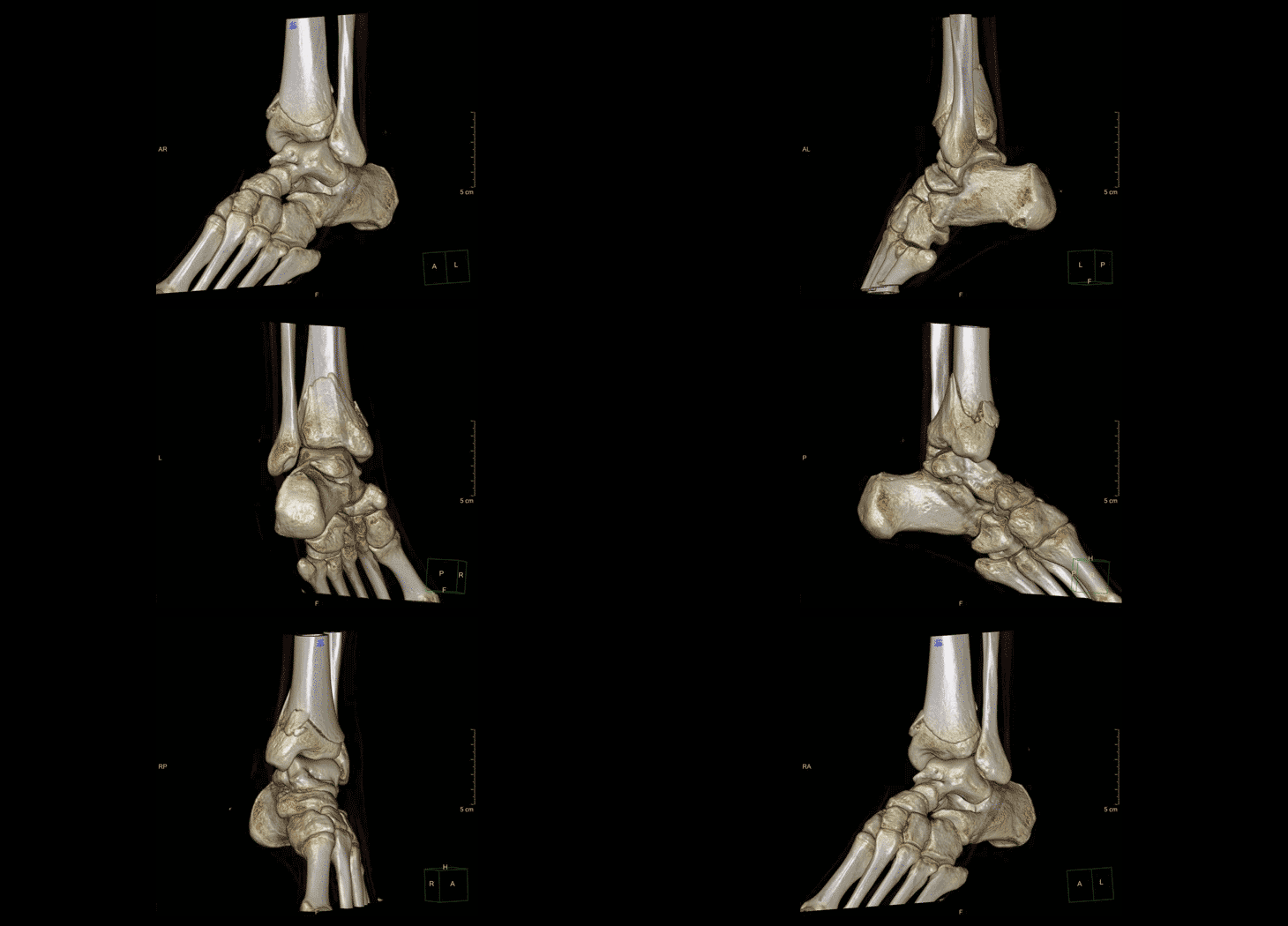
Secondary#ankle#distaltibialnonunion#ettorevulcano
Their study, “Ankle Salvage Following Nonunion of Distal Tibia Fractures, was published online in the Foot and Ankle International on June 4, 2018.

Ettore Vulcano, M.D., assistant professor of Orthopaedics at the Icahn School of Medicine at Mount Sinai, and his colleagues evaluated radiographic and clinical outcomes of 21 patients who underwent ankle-sparing bone transport for periarticular distal tibial nonunions between January 2006 and July 2016.
The primary endpoints were time to union and the American Orthopaedic Foot & Ankle Society (AOFAS) score.
The mean age of the patients was 48.6 years and more than half of them were male. Vulcano and colleagues followed the patients for an average of 14.6 months. Thirteen of the 21 patients had infected nonunions.
According to the data, all fractures achieved union with a mean time to union of 37.4 weeks. The mean AOFAS score was 86.3 points. At 6 months, the mean lateral distal tibial angle of 89.2 degrees and a mean anterior distal tibial angle of 76 degrees. Patients also had little leg length discrepancy.
Vulcano and his colleagues concluded that the ankle-sparing bone transport technique was an effective alternative to bone graft and arthrodesis, and that it was even safe for use in patients with infected nonunions in close proximity to the ankle joint.
Vulcano told OTW, “Periarticular ankle nonunions are an enormous challenge for orthopedic surgeons. The minimal bone stock makes it terribly difficult to treat the nonunion without sacrificing the ankle joint in order to make space for the hardware needed to stabilize the bone. Circular external fixators allow the use of thin wires to “shish kebab” the little bone left, but without compromising the stability of the construct. As a matter of fact, the stability of the external fixator is more stable than any other internal device.”
“Prior to fusing ankles for these conditions, it may be worth seeking the opinion of an expert in external fixators for ankle conditions,” he added.
“Despite being an excellent procedure, ankle fusions should be avoided whenever possible. Surgeons living in proximity to orthopedists trained in complex ankle reconstructions with external fixators should consider referring said patients. Nonetheless, the low availability (numerically and geographically speaking) of specialized orthopedic surgeons, as well as the difficulty of some patients to travel to the nearest specialist (which may be many hours away) can make access to care challenging.”
Author
React:
Discussion
This is a fascinating development. In my practice we've seen similar outcomes with the revised protocol. The key differentiator seems to be patient selection criteria. Has anyone else noticed the correlation with BMI thresholds?
Great point. I'd push back slightly on the conclusion, the sample size in the cited study is too small to draw population-level inferences. That said, the directional signal is compelling and worth a larger RCT.
We implemented a similar approach last year. Early results are promising but we're still gathering 12-month follow-up data. Happy to share our protocol if anyone is interested.
Join the conversation
Orthopedic professionals are discussing this. Sign in and upgrade to read every comment and add your voice.