
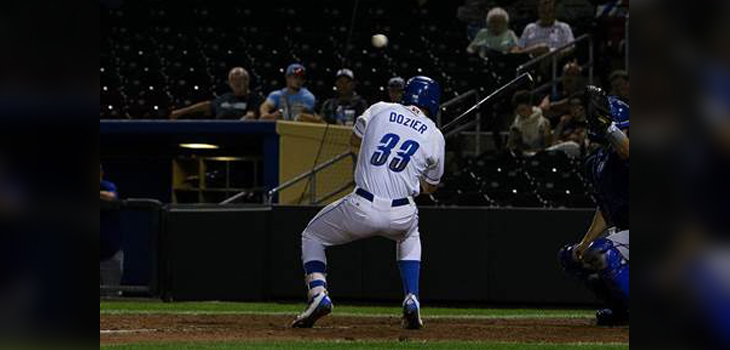
While getting hit by a pitch does not occur frequently, a new study, “Getting Hit by Pitch in Professional Baseball: Analysis of Injury Patterns, Risk Factors, Concussions, and Days Missed for Batters,” which was published online on May 16, 2018 in The American Journal of Sports Medicine, has found that getting hit by a pitch is a significant source of time out of play.
Updated Stats on Hit Batter Injuries
1 min read Premium comments
Secondary#concussion#baseball#hitbypitch
The researchers involved in this study wanted to investigate the effect of hit by pitch (HBP) injuries in terms of time out of play injury patterns resulting in the greatest time out of play. They collected data from the Major League Baseball (MLB) Health and Injury Tracking System on all injuries to batters hit by pitch during the 2011 through 2015 MLB and Minor League Baseball seasons.
According to the data, there were 2,920 HBP injuries and they resulted in 24,624 days missed over the 5 seasons. MLB HBP injuries occurred at a rate of 1 per 2,554 plate appearances (1 per 9.780 pitches thrown).
In addition, 3.1% of MLB injuries and 1.2% of Minor League Baseball injuries required surgical treatment (p = .005). Hits to the head/face (Odds Ratio, 28.7) or to distal upper extremity (Odds Ratio, 6.4) were likely to lead to injury.
The most common areas of the body for an injury to occur when hit by a pitch were hand/fingers (n = 638, 21.8%), head/face (n = 497, 17.0%) and elbow (n = 440, 15.7%) and concussions (146, 5.0%).
They also found that protective gear can make a difference. In their study, players with an unprotected elbow missed 1.7 more days than those who wore an elbow protector (p = .554) when they were injured after being hit by a pitch.
The researchers wrote that HBP injuries represent a significant amount of lost play time and that after contusion, concussions were the most common injury diagnosis.
Author
React:
Discussion
This is a fascinating development. In my practice we've seen similar outcomes with the revised protocol. The key differentiator seems to be patient selection criteria. Has anyone else noticed the correlation with BMI thresholds?
Great point. I'd push back slightly on the conclusion, the sample size in the cited study is too small to draw population-level inferences. That said, the directional signal is compelling and worth a larger RCT.
We implemented a similar approach last year. Early results are promising but we're still gathering 12-month follow-up data. Happy to share our protocol if anyone is interested.
Join the conversation
Orthopedic professionals are discussing this. Sign in and upgrade to read every comment and add your voice.