
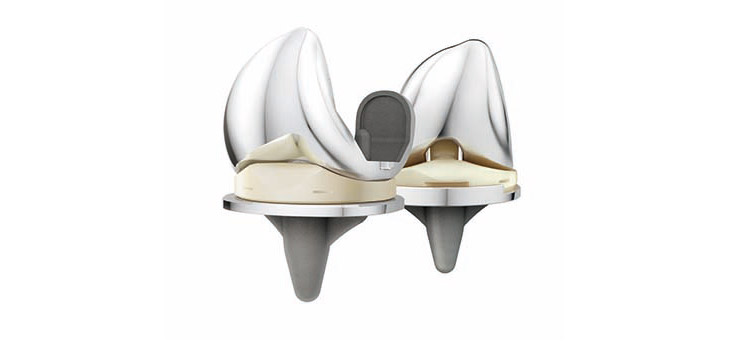
DePuy Synthes, based in Warsaw, Indiana, has announced updated clinical data for its ATTUNE Knee System.
Updated Clinical Data for DePuy’s ATTUNE Knee
2 min read Premium comments
Secondary#depuysynthes#knee#attunekneesystem
According to the company, a multicenter study of 200 cases presented at the 2nd World Arthroplasty Congress in Rome on Patient Reported Outcome Measures (PROMS) reported a statistically significant improvement in knee physical function at six months with the ATTUNE Knee compared to preoperative baseline, using the Knee injury and Osteoarthritis Outcome Score-Physical Function Short Form (KOOS-PS).
This data, from the Netherlands, found that 80 percent of those ATTUNE Knee patients’ experienced KOOS-PS improvements by six months. Researchers observed statistically significant improvements at intervals prior to six months. Finally, the company reported that pain and other PROMS were statistically significantly better at six weeks compared with pre-operative baseline.
“This multi-center outcomes study is further evidence of the positive performance of the ATTUNE Knee, and this study provides additional evidence on the rate of recovery—information that is useful when counseling patients before surgery,” said Geert Meermans, M.D., Bravis Hospital, The Netherlands.
“From my intraoperative and patient follow-up experiences, the ATTUNE Knee appears to provide greater stability than other implants I have used, which may be a contributing factor to these positive results.”
In addition, a report generated by DePuy Synthes summarized a series of studies across several countries with differing healthcare systems.
This retrospective review of five real-world evidence studies, titled “The Impact of Implant Design on Hospital Length of Stay and Discharge Destination: Evidence Summary Report,” evaluated the connection between implant design and patient hospital length of stay (LOS), and encompassed some data that has been presented or accepted at the International Society for Pharmacoeconomics and Outcomes Research (ISPOR).
This report, sponsored by DePuy Synthes and enrolling patients in the U.S., U.K., Germany, Italy and The Netherlands, was designed to evaluate whether patients treated with the ATTUNE Knee had a shorter hospital length of stay (LOS) versus a number of comparative implants. The report concluded that in each of these studies, the ATTUNE Knee patients were discharged from the hospital sooner than with the comparative implants used.
Commenting on the LOS findings, Dr. Meermans concluded, “While it’s important to acknowledge that many factors can contribute to differences in length of stay, the data seems to suggest that implant design may be an important factor to consider in total knee arthroplasty procedures. This latest evidence gives me greater confidence that the device could help hospitals cost-effectively keep pace with the growing total knee arthroplasty demand.”
Dr. Meermans told OTW, “The findings from the multicenter study and our LoS study are both important to counsel patients preoperatively on expected recovery and hospital length of stay. The shorter LOS found in patients that had an ATTUNE implant can be helpful to decrease the financial burden associate with TKA and to optimize bed planning and occupancy in an orthopedic department.”
Author
React:
Discussion
This is a fascinating development. In my practice we've seen similar outcomes with the revised protocol. The key differentiator seems to be patient selection criteria. Has anyone else noticed the correlation with BMI thresholds?
Great point. I'd push back slightly on the conclusion, the sample size in the cited study is too small to draw population-level inferences. That said, the directional signal is compelling and worth a larger RCT.
We implemented a similar approach last year. Early results are promising but we're still gathering 12-month follow-up data. Happy to share our protocol if anyone is interested.
Join the conversation
Orthopedic professionals are discussing this. Sign in and upgrade to read every comment and add your voice.