
New National Institutes of Health-funded research in mice has uncovered a tantalizing clue regarding how mesothelial cells on the spleen may be antigenic to inflammatory diseases like rheumatoid arthritis and, potentially, other autoimmune diseases.
Surprising Study Finds Mesothelial Cell/RA Link
2 min read Premium comments
Secondary#arthritis#inflammation#mesothelialcells
This research was conducted by a team from the Medical College of Georgia (MCG) and their results, “Oral NaHCO3 Activates a Splenic Anti-Inflammatory Pathway: Evidence That Cholinergic Signals Are Transmitted via Mesothelial Cells” were published in the May 2018 edition of The Journal of Immunology.
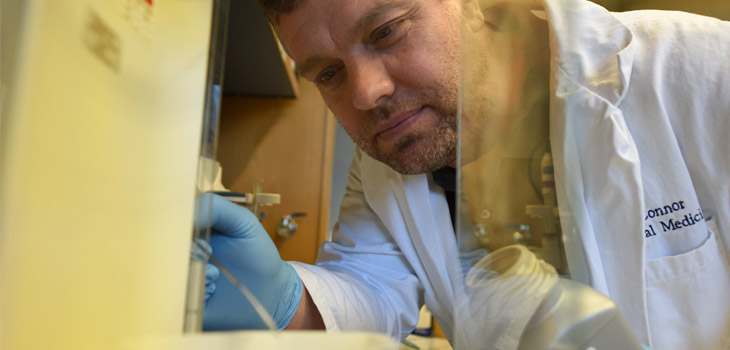
Paul O’Connor, Ph.D., renal physiologist in the MCG Department of Physiology at Augusta University and the study’s corresponding author, told OTW, “We became interested in inflammation when we unexpectedly found that giving rats sodium bicarbonate to drink resulted in a shift in polarization from primarily pro-inflammatory to anti-inflammatory or regulatory immune cells within the kidney, whether or not we were using an injury model.”
“After finding that sodium bicarbonate supplementation promoted an anti-inflammatory shift in the kidney, we wanted to know where these anti-inflammatory immune cells were coming from. We decided to look and see if the effect was systemic so we took the spleens from some of our rats. We saw the same types of shifts occurring in the rat spleens.”
“The spleen is an immune organ. We wanted to test whether the immune cells that we found in the kidney and blood were coming from the spleen.”
“We designed a study where we removed the spleen of rats 2 weeks before beginning treatment or just did a sham surgery where we operated on the rats, moved the spleen, but did not remove it.”
“Surprisingly, we found that the response to sodium bicarbonate drinking was completely abolished in both groups. We found thin connections lined with mesothelial cells that attached to the capsule of the spleen. These mesothelial cells proliferated after moving the spleen and also stained positive for a number of ‘neuronal markers.’”
“This led us to hypothesize that it was these mesothelial cells that were signaling the spleen to promote an anti-inflammatory response. We then performed another study in which we did the same surgical procedure but did not remove the spleen; these rats were able to respond normally to sodium bicarbonate. These data were important as they, for the first time, suggest mesothelial cells are acting as a signal between the stomach response to bicarbonate and spleen.”
“For a long time mesothelial cells were viewed as structural, helping the organs they line slide against one another, but more recently they were identified to act like antigen presenting cells. We now provide the first evidence that these cells may actually transmit signals between organs (in this case from the peritoneum to the spleen).”
“This was a basic science study looking at uncovering mechanisms of action, and while we have some interesting results, much more needs to be done before any practical outcomes can be achieved. As innocuous as NaHCO3 may seem, it is dangerous in many people, and we have done no studies on safety, efficacy or dose. Obviously, people should not take this information and use it to self-medicate.”
Author
React:
Discussion
This is a fascinating development. In my practice we've seen similar outcomes with the revised protocol. The key differentiator seems to be patient selection criteria. Has anyone else noticed the correlation with BMI thresholds?
Great point. I'd push back slightly on the conclusion, the sample size in the cited study is too small to draw population-level inferences. That said, the directional signal is compelling and worth a larger RCT.
We implemented a similar approach last year. Early results are promising but we're still gathering 12-month follow-up data. Happy to share our protocol if anyone is interested.
Join the conversation
Orthopedic professionals are discussing this. Sign in and upgrade to read every comment and add your voice.