
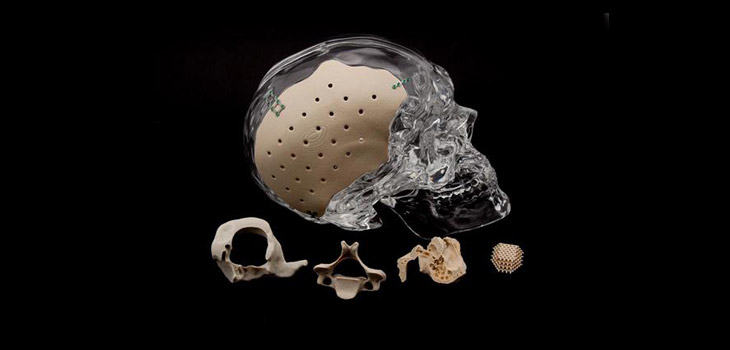
Oxford Performance Materials, Inc. (OPM), an advanced materials science and high performance additive manufacturing (HPAM) company based in South Windsor, Connecticut, has partnered with Tokyo, Japan-based JSR Corporation (JSR), a materials supplier, to advance OPM’s poly-ether-ketone-ketone (PEKK)-based 3D-printed orthopedic devices and biomedical and dental materials businesses throughout Asia.
Oxford, JSR Corp Partner to Advance Platform in Asia
1 min read Premium comments
#oxfordperformancematerialsSecondary#JSRcorp
The two companies “…will establish operations in Japan as ‘OPM Asia,’ with an exclusive regional license to exploit OPM’s proprietary OsteoFab biomedical device 3D printing technology and OXPEKK materials technology.” JSR will supply the equity capital for OPM Asia. “The OPM Asia license will cover a broad territory consisting of Japan, China, Taiwan, Korea, Brunei Darussalam, Cambodia, Lao PDR, Malaysia, Myanmar, Philippines, Singapore, Thailand, Vietnam and India.”
Scott DeFelice is CEO of Oxford Performance Materials. He told OTW, “JSR is committed to building a personalized medicine ecosystem and OPM is a pioneer in personalized medicine as the first and only company to receive FDA 510(k) clearance to manufacture 3D printed patient-specific polymeric implants. This partnership is an ideal fit to advance OPM’s technology platform throughout Asia and to further strengthen JSR’s personalized medicine capabilities.”
“This partnership will bring cost-effective medical innovation to patients in one of the fastest growing healthcare markets in the world, enabling the Asian orthopedics industry to improve patient outcomes at a lower cost.”
Author
React:
Discussion
This is a fascinating development. In my practice we've seen similar outcomes with the revised protocol. The key differentiator seems to be patient selection criteria. Has anyone else noticed the correlation with BMI thresholds?
Great point. I'd push back slightly on the conclusion, the sample size in the cited study is too small to draw population-level inferences. That said, the directional signal is compelling and worth a larger RCT.
We implemented a similar approach last year. Early results are promising but we're still gathering 12-month follow-up data. Happy to share our protocol if anyone is interested.
Join the conversation
Orthopedic professionals are discussing this. Sign in and upgrade to read every comment and add your voice.