
On May 10, 2018, the FDA 510(k) cleared OrthoPediatrics Corp.’s PediNail Intramedullary Nail for kids. According to the company, it is the company’s 25th surgical system.
OrthoPediatrics’ Femoral Nail for Kids Cleared by FDA
2 min read Premium comments
Secondary#orthopediatricscorp#fdaclearance#femoralnail#brokenbone
The company stated the system utilizes, “high precision, innovative, and best-in-class instruments to accompany two distinct pediatric-specific nail offerings. The platform is an unparalleled upgrade to the legacy system and the next step in the evolution of the Company’s Intramedullary Nailing franchise.”
Luis Vega, M.D., OrthoPediatrics’ Engineering Director of Trauma and Deformity Correction, stated, “Our team is excited about the Pediatric Nailing Platform. We worked alongside pediatric orthopedic surgeons to create a system which features dedicated child and adolescent offerings, enhanced fixation options, and state-of-the-art instrumentation. The new platform will allow surgeons to treat a wider range of children and pathologies and serve as the foundation for future intramedullary nailing endeavors.”
The FDA took almost nine months to clear the device, having received the request from the company last August.
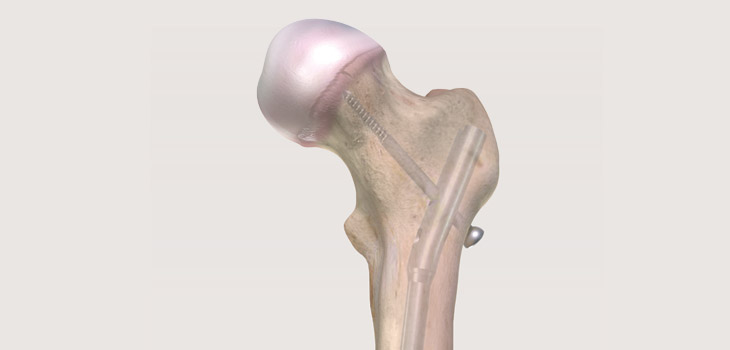
According to the company’s website, the PediNail Intramedullary Nail “is anatomically designed to meet the unique needs of pediatric and adolescent patients, and is available in diameters of 7, 8, 9, and 10mm with lengths ranging from 20-38cm. The procedure is performed using a lateral trochanteric entry point to facilitate a simplified procedure and reduces the danger to blood vessels near the piriformis fossa.”
“The nails complex three-dimensional geometry includes a proximal lateral bend to accommodate its trochanteric entry point and smaller diameter that allows for easier insertion without the need for excessive reaming, or widening, of the canal. The nail also has an anterior bow, which mimics normal pediatric anatomy for children ages 8-16, as well as a distal lateral bend to ease insertion lateral to the greater trochanter, minimizing medial cortex interference.”
Indications
The system addresses “femoral shaft fractures, subtrochanteric femur fractures, ipsilateral neck/shaft fractures, prophylactic nailing of impending pathologic fractures, nonunions, malunions, and fixation of femurs that have been surgically prepared (osteotomy) for correction of deformity.”
Additional indications include “simple long bone fractures, severely comminuted fractures, spiral fractures, large oblique and segmental fractures, polytrauma and multiple fractures, reconstruction following tumor resection and bone grafting, supracondylar femur fractures, bone lengthening and shortening, fixation of fractures that occur in and between the proximal and distal third of the long bones being treated.”
Author
React:
Discussion
This is a fascinating development. In my practice we've seen similar outcomes with the revised protocol. The key differentiator seems to be patient selection criteria. Has anyone else noticed the correlation with BMI thresholds?
Great point. I'd push back slightly on the conclusion, the sample size in the cited study is too small to draw population-level inferences. That said, the directional signal is compelling and worth a larger RCT.
We implemented a similar approach last year. Early results are promising but we're still gathering 12-month follow-up data. Happy to share our protocol if anyone is interested.
Join the conversation
Orthopedic professionals are discussing this. Sign in and upgrade to read every comment and add your voice.