
A series of one-legged jumps has led to a substantial increase in the material strength in the loaded leg, say the authors of a new study.
One-Legged Jumps Increase Bone Strength…and Fast!
2 min read Premium comments
Secondary#bonestrength#mechanicalloading
The research, “High‐Impact Mechanical Loading Increases Bone Material Strength in Postmenopausal Women—A 3‐Month Intervention Study,” appears in the April 27, 2018 edition of the Journal of Bone and Mineral Research.
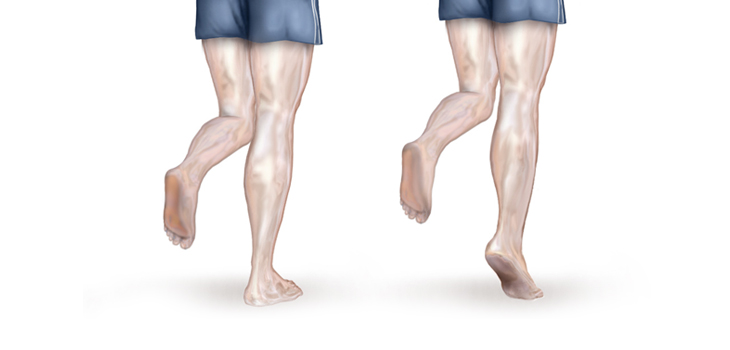
The authors wrote, “A total of 20 healthy and inactive postmenopausal women (aged 55.6 ± 2.3 years [mean ± SD]) were included and asked to perform an exercise program of daily one‐legged jumps (with incremental number, from 3×10 to 4×20 jumps/d) for 3 months.”
“All participants were asked to register their performed jumps in a structured daily diary. The participants chose one leg as the intervention leg and the other leg was used as control. The operators were blinded to the participant’s choice of leg for intervention.”
Co-author, professor and senior consultant at Sahlgrenska University hospital in Mölndal, Sweden, Mattias Lorentzon, M.D., told OTW, “Prior to our study, it was not known if the human bone could adapt to increased loads in other ways than increasing the bone mass (the amount of calcium hydroxyapatite and the size of the bone).”
“This process takes considerable time (usually over six months) and would not allow the skeleton to adapt rapidly if subjected to a dramatic increase in loading (as a result of high intensity exercise or jumping). We therefore hypothesized that other mechanisms, such as alterations in the actual material properties could occur more rapidly.”
“The most important result was that in many study subjects the increased loading (due to the one-legged jumps) led to a dramatic increase in the material strength in the loaded leg, indicating a novel mechanism regulating the skeletal strength.”
“The take home message of this study is that loading (as a result of e.g., exercise) can be beneficial for skeletal strength and that the response is very rapid, occurring within a few months.”
“Our results also indicate that using microindentation is necessary to detect alterations in bone material properties, that is likely to affect bone strength. Previous x-ray based techniques are not sufficient to capture skeletal alterations such as the ones studied here. Microindentation could be useful to measure bone material strength also in other clinical conditions or surgical procedures dependent on strength and quality of the bone.”
Author
React:
Discussion
This is a fascinating development. In my practice we've seen similar outcomes with the revised protocol. The key differentiator seems to be patient selection criteria. Has anyone else noticed the correlation with BMI thresholds?
Great point. I'd push back slightly on the conclusion, the sample size in the cited study is too small to draw population-level inferences. That said, the directional signal is compelling and worth a larger RCT.
We implemented a similar approach last year. Early results are promising but we're still gathering 12-month follow-up data. Happy to share our protocol if anyone is interested.
Join the conversation
Orthopedic professionals are discussing this. Sign in and upgrade to read every comment and add your voice.