
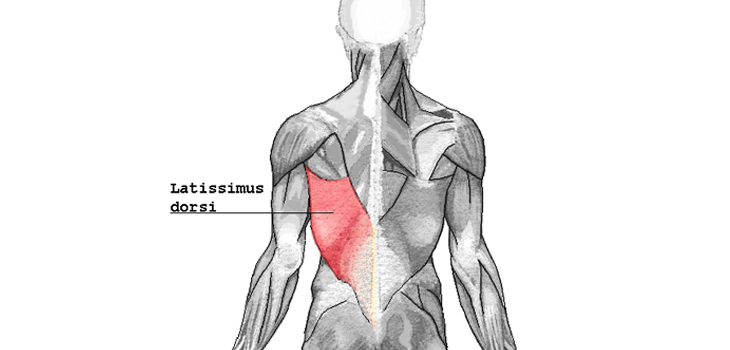
Researchers from France and India have just published a study indicating that the rate of rupture of latissimus dorsi transfer is much higher than previously thought.
Latissimus Dorsi Transfer Rupture Underestimated
2 min read Premium comments
#rotatorcuffSecondary#hip#latissimusdorsitransfer
The study, “Arthroscopically-Assisted Latissimus Dorsi Transfer for Irreparable Rotator Cuff Insufficiency: Modes of Failure and Clinical Correlation,” appears in the April 2018 edition of Arthroscopy.
Jean-David Werthel, M.D., orthopedic surgeon with Clinique Bizet in Paris, France and co-author, told OTW, “We were concerned because we noticed that this procedure (latissimus dorsi transfer for painful loss of elevation) led to variable results in our patients with some doing very well and others not doing well at all but without any clear explanation.”
“Therefore, we thought that the rate of rupture of the tendon transfer previously reported in the literature was probably underestimated.”
“Our goal was to come up with a more reliable method to assess postoperative rupture of the tendon transfer. We used metallic markers that could be easily tracked on standard radiographs and found a rate of rupture much higher than previously thought: 38% versus 7% in the published literature.”
“The main point of interest in our method is the use of metallic markers to evaluate the rate of postoperative rupture of the tendon transfer. This allowed us to follow the integrity of the tendon transfer on standard radiographs rather than by ultrasound or magnetic resonance imaging. These methods very likely underestimate the rate of postoperative rupture as some fibrous continuity can be observed and mistaken for a non-ruptured tendon transfer.”
“First of all, we found that the rupture rate was much higher than previously reported (38% versus 8%).”
“Secondly, we found that clinical results were very different between patients who had a ruptured transfer and those who did not. Patients who had an intact tendon transfer had a mean postoperative Constant score of 68.7 whereas those who had a ruptured transfer of 42.8.”
“When the tendon transfer remains intact it gives very satisfactory functional results. However, rupture rates are higher than previously thought. Different methods of fixation of the transfer without any tunnels inside the humeral head and without excessive tension could probably lower these rupture rates and therefore could lead to improved functional results.”
“Latissimus dorsi transfer does improve function and pain in patients with irreparable postero-superior rotator cuff tear and painful loss of elevation. New methods of fixation need to be investigated to improve this high rupture rate. We are currently evaluating different methods with rupture rates that seem to decrease to less than 10%.”
Author
React:
Discussion
This is a fascinating development. In my practice we've seen similar outcomes with the revised protocol. The key differentiator seems to be patient selection criteria. Has anyone else noticed the correlation with BMI thresholds?
Great point. I'd push back slightly on the conclusion, the sample size in the cited study is too small to draw population-level inferences. That said, the directional signal is compelling and worth a larger RCT.
We implemented a similar approach last year. Early results are promising but we're still gathering 12-month follow-up data. Happy to share our protocol if anyone is interested.
Join the conversation
Orthopedic professionals are discussing this. Sign in and upgrade to read every comment and add your voice.