
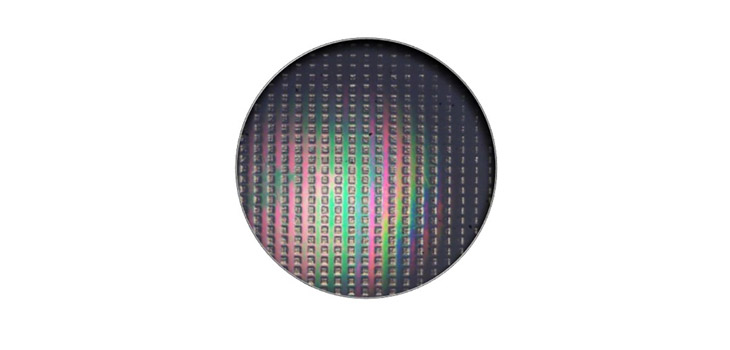
By simulating the textured surface of cartilage, researchers from Arkansas and the Czech Republic have found that using prostheses with square micro-dimples could extend the life of hip implants.
Extend Implant Life With Little Dimples?
2 min read Premium comments
Secondary#knee#hipimplant#jointsurface
The study, designed by Dipankar Choudhury, a post-doctoral fellow in the Center for Advanced Surface Engineering at University of Arkansas (U of A), appears in the May 2018 edition of The Journal of the Mechanical Behavior of Biomedical Materials.
It is titled, “Enhanced lubricant film formation through micro-dimpled hard-on-hard artificial hip joint: An in-situ observation of dimple shape effects.”
Min Zou, Ph.D., professor of mechanical engineering at the U of A and lead author on the research, told OTW, “Lubricant film thickness and its distribution are among the most important parameters that determine the durability of prosthetic joints. An in-situ study can provide an accurate lubricant film thickness and distribution measurement over time.”
The University of Arkansas said, “…Zou and Choudhury simulated the textured surface of cartilage, its so-called ‘converging gaps,’ or natural dimples, that promote the secretion of synovial fluid and enhance thickness of the lubricating film.”
“Then, collaborating with a research group in the Czech Republic, Zou and Choudhury joined the prosthetic parts and performed wear and friction tests with a pendulum that simulated the swinging motion of a human leg…. Compared to the non-dimpled prostheses, all three shapes improved lubricant film thickness. The prostheses with square- and triangular-shaped indentations demonstrated an average lubricant film thickness 3.5 times greater than the non-dimpled prosthesis.”
Dr. Zou told OTW, “This is a fundamental study performed for only a short period. We recommend testing the prostheses with square- and triangular-shaped indentations using a hip joint simulator with more cycles and different gaits. A clinical trial can be carried out to identify the effect of surface textures on the durability and robustness of artificial joints.”
“Currently, all implants (hip and knee) have a non-dimpled surface. Orthopedic surgeons can see the in-situ images of the lubricated interface and can acquire knowledge on the film formation mechanisms for synovial fluid or bovine serum. Furthermore, they can recognize how lubricant film can be thickened in a short transition period using an appropriate dimpled surface.”
Author
React:
Discussion
This is a fascinating development. In my practice we've seen similar outcomes with the revised protocol. The key differentiator seems to be patient selection criteria. Has anyone else noticed the correlation with BMI thresholds?
Great point. I'd push back slightly on the conclusion, the sample size in the cited study is too small to draw population-level inferences. That said, the directional signal is compelling and worth a larger RCT.
We implemented a similar approach last year. Early results are promising but we're still gathering 12-month follow-up data. Happy to share our protocol if anyone is interested.
Join the conversation
Orthopedic professionals are discussing this. Sign in and upgrade to read every comment and add your voice.