
Salt Lake City-based DiscGenics, Inc. has announced that the first patient has been treated in its Phase I/II U.S. clinical trial of IDCT for mild-to-moderate degenerative disc disease (DDD).
DiscGenics: 1st Patient in Cell Treatment for DDD Trial
2 min read Premium comments
Secondary#degenerativediscdisease#discgenics#idct
Domagoj Coric, M.D., the study’s principal investigator, led the treatment at Carolina Neurosurgery and Spine Associates (CNSA) in Charlotte, North Carolina.
According to the company, “IDCT is an allogeneic (donor-derived), non-invasive cell therapy comprised of proprietary Discogenic Cells and a viscous scaffold carrier. This prospective, randomized, double-blinded, vehicle- and placebo-controlled study is designed to evaluate the safety and preliminary efficacy of IDCT at varying dosage levels in subjects with single-level, symptomatic lumbar DDD, a major cause of chronic low back pain.”
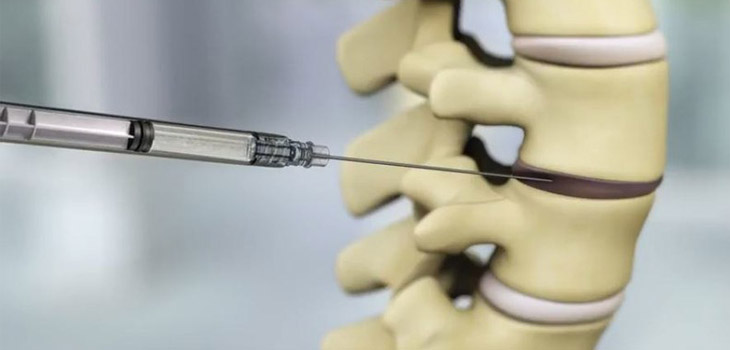
The trial is taking place in up to 10 centers across the U.S. and is expected by its principal investigators to enroll approximately 60 subjects. “Those who meet all eligibility criteria are randomized to one of four treatment cohorts: low dose IDCT (n=20), high dose IDCT (n=20), vehicle (n=10) and placebo (n=10). Each subject receives a single intradiscal injection of his or her assigned treatment into the target symptomatic lumbar intervertebral disc. Following treatment, subjects are observed and evaluated for a period of one year, with a one-year extension period.”
Dr. Coric told OTW, “The process is straightforward. It consists of an outpatient injection (performed in an ambulatory surgery center by one of CNSA’s physiatrists, Andrew Sumich). The entire procedure itself takes ~10 minutes and the patient is discharged the same day.”
“As a Phase I/II Investigational New Drug (IND) trial, the primary outcome is safety and tolerability. Secondary outcome measures include validated clinical outcome scales, Oswestry Disability Index (ODI) and Visual Analog Scale (VAS). Patient’s also undergo serial MRI imaging to evaluate for radiographic changes, T2 signal change on MR is also a secondary outcome measure.”
“Disc repair with culture-expanded disc cells is an investigational procedure, there are no FDA-approved procedures for disc repair. It is exciting to evaluate a minimally invasive and motion-preserving procedure to potentially treat mechanical low back pain due to degenerative disc disease earlier in the degenerative cascade. The trial is prospective, double-blinded and placebo controlled; the treatment arms involve two different disc cell doses, 3 million cells/cc and 6 million cells/cc.”
Author
React:
Discussion
This is a fascinating development. In my practice we've seen similar outcomes with the revised protocol. The key differentiator seems to be patient selection criteria. Has anyone else noticed the correlation with BMI thresholds?
Great point. I'd push back slightly on the conclusion, the sample size in the cited study is too small to draw population-level inferences. That said, the directional signal is compelling and worth a larger RCT.
We implemented a similar approach last year. Early results are promising but we're still gathering 12-month follow-up data. Happy to share our protocol if anyone is interested.
Join the conversation
Orthopedic professionals are discussing this. Sign in and upgrade to read every comment and add your voice.