
Water as a contrast agent—which lowers the price of an MRI dramatically—and can be used in the field?
Could Water Render Traditional MRIs Obsolete?
2 min read Premium comments
Secondary#mri#knee
Really? YES.
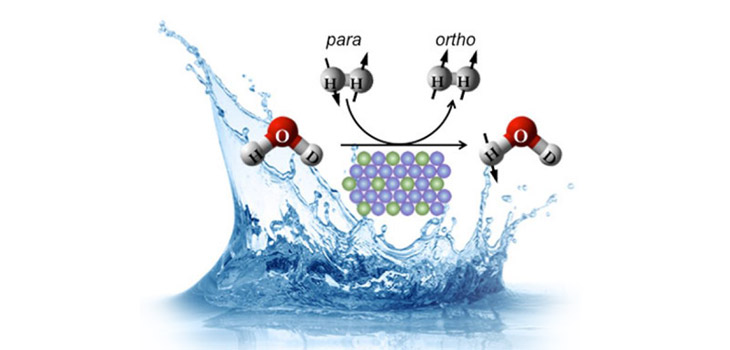
Researchers at the National High Magnetic Field Laboratory (National MagLab) at Florida Stat University in Tallahassee, Florida, have discovered a superior contrasting agent which could increase the contrast of smaller, low powered magnetic resonance imaging (MRI) machines. That contrasting agent? Water!
Their study, funded by the National Science Foundation “Surface-Mediated Hyperpolarization of Liquid Water from Parahydrogen,” appears in the April 19, 2018 edition of Chem.
A research team led by Clifford Bowers, Ph.D., a chemist at the University of Florida (UF) and the National MagLab, discovered a way to turn H20 into an effective contrast agent used in MRIs.
Dr. Bowers told OTW, “An active community of researchers has emerged that is developing parahydrogen-enhanced contrast agents for sensitivity-enhanced molecular MRI. In my group, we are focused on hyperpolarization of contrast agents by heterogeneous catalysis, which allows easy separation of the produce from the catalyst.”
“In our paper published last year in Angewandte Chemie, we showed that hyperpolarized hydroxyethyl propionate (HEP) can be produced using intermetallic nanoparticles, e.g. Pt3Sn. In the control experiment, with no hydrogenation substrate present, graduate student Evan Zhao observed that water could be hyperpolarized by bubbling parahydrogen through an aqueous suspension of the catalyst.”
“This is what led us to the SWAMP [surface waters are magnetized by parahydrogen] effect and the recent publication in the journal Chem.”
“One of the challenges is the lack of contrast between the flowing water molecules being traced and the bulk water or water contained in the specimen. Traditional perfusion MRI techniques employ tracers that are invasive, somewhat toxic, and do not precisely reflect the properties of water.”
“Most importantly, the use of pre-polarized water in MRI could eliminate the need for the large and expensive superconducting magnets used in conventional MRI.”
“Sterile, highly pure hyperpolarized water produced from parahydrogen can be prepared in a small, portable device and then injected into the region to be scanned in the patient. A relatively inexpensive MRI scanner could then be used for the detection of the hyperpolarized water and would provide an inexpensive alternative for smaller medical offices and clinics.”
“Low field MRI has the important advantage of being safe to use on patients with metal implants or possible shrapnel wounds. For that reason, when paired with low-field MRI, hyperpolarized water would be an ideal contrast agent for use in the battlefield clinics.”
Author
React:
Discussion
This is a fascinating development. In my practice we've seen similar outcomes with the revised protocol. The key differentiator seems to be patient selection criteria. Has anyone else noticed the correlation with BMI thresholds?
Great point. I'd push back slightly on the conclusion, the sample size in the cited study is too small to draw population-level inferences. That said, the directional signal is compelling and worth a larger RCT.
We implemented a similar approach last year. Early results are promising but we're still gathering 12-month follow-up data. Happy to share our protocol if anyone is interested.
Join the conversation
Orthopedic professionals are discussing this. Sign in and upgrade to read every comment and add your voice.