
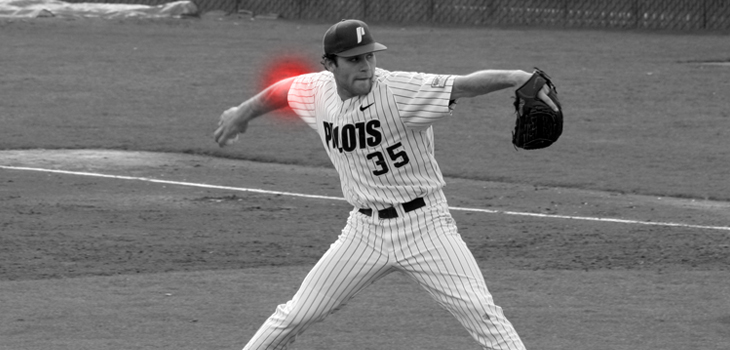
When an overhead athlete, especially a baseball pitcher, experiences elbow pain, the immediate fear is that a ulnar collateral ligament (UCL) injury is to blame, but new research from Midwest Orthopaedics at Rush suggests that isolated ulnar neuritis, also referred to as cubital tunnel syndrome, can often be the source of the pain not the UCL.
Baseball: Elbow Pain Not Always UCL Injury
2 min read Premium comments
#overheadathletesSecondary#baseballpitcher#medialelbowpain
According to a recent press release, physicians at Midwest Orthopaedics at Rush, who are also team physicians for the Chicago White Sox, recently presented data at the 2018 American Academy of Orthopaedic Surgeons (AAOS) annual meeting that highlighted the need to be more aware of this condition and the fact that ulnar nerve decompression with transposition is an effective procedure to get them back to their sport.
Gregory P. Nicholson, M.D., associate professor at Rush University Medical Center and surgeon with Midwest Orthopaedics at Rush, and his colleagues identified 36 young athletes (29 males and 7 females) with isolated ulnar neuritis that underwent ulnar nerve decompression with transposition between 2009 and 2016. Fifteen percent had a prior elbow surgery.
The average age of the athletes was 18.3 years. Twenty-two of the male athletes were baseball pitchers and 4 of the female athletes were softball players (2 pitchers and 2 outfielders). The rest of the patients were other types of overhead athletes.
The researchers found that 92% of the patients (33 athletes) who underwent an ulnar nerve decompression with transposition during the study were able to return to play between three to five months post-procedure. In addition, 81% of them (29 athletes) were able to return at the same performance level.
Overall there were 3 (8%) adverse outcomes reported, with one patient reporting a recurrence of ulnar neuritis symptoms. No subsequent reoperations were needed however.
Nicholson told OTW, “There were no perioperative complications. We had three patients report adverse outcomes, but they were pretty mild.”
He explained that the reason this study is important is because in current literature there is very limited data on isolated surgical management of ulnar neuritis in young overhead athletes.
He explained, “When a young thrower comes into the office with medial elbow pain, everybody freaks out because medial elbow pain means Tommy John [UCL] surgery, but what we are finding is that the symptoms of ulnar neuritis almost mimics some of the symptoms you have with Tommy John. And the athletes often don’t report that they have tingling or numbness in their pinky or ring finger so the index of suspicion has to be there.”
The problem with mistaken diagnosis, he continued, is that when the MRI shows a normal UCL, the patient is often referred to rehabilitation which could make the nerve pain worse.
The bottom line he said is “We need to recognize that ulnar neuritis is a potential cause of medial elbow pain in this population, and that the treatment although surgical will lead to a relatively rapid return to their sport.”
Author
React:
Discussion
This is a fascinating development. In my practice we've seen similar outcomes with the revised protocol. The key differentiator seems to be patient selection criteria. Has anyone else noticed the correlation with BMI thresholds?
Great point. I'd push back slightly on the conclusion, the sample size in the cited study is too small to draw population-level inferences. That said, the directional signal is compelling and worth a larger RCT.
We implemented a similar approach last year. Early results are promising but we're still gathering 12-month follow-up data. Happy to share our protocol if anyone is interested.
Join the conversation
Orthopedic professionals are discussing this. Sign in and upgrade to read every comment and add your voice.