
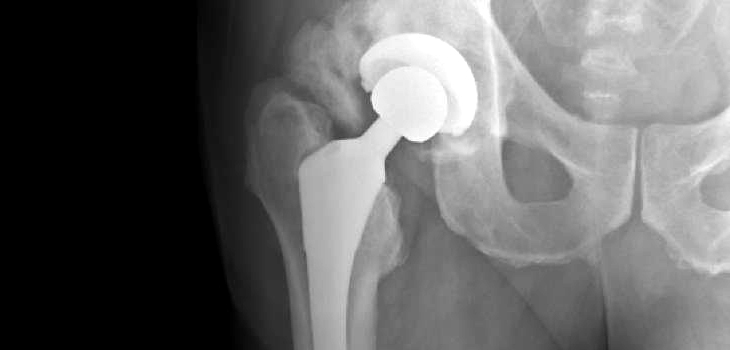
New research has found that traditional methods of using alignment guides and bone landmarks for cup placement in total hip arthroplasty (THA) fall short.
Supine Anterior THA Trumps Posterior and Fluoroscopy Helps!
2 min read Premium comments
#totalhipreplacementSecondary#hip#johnmasonis
The study authors wrote, “[We] evaluated the position of the acetabular component in primary total hip replacement was more accurate with a direct anterior approach or a posterior approach and whether intraoperative imaging improved the accuracy of cup placement…”

Their work is titled, “Is it the surgical approach or the intra-operative imaging? What has the greatest effect on acetabular component.”
John L. Masonis, M.D. an orthopedic surgeon at OrthoCarolina and co-author on this yet-to-be published study, commented to OTW, “Component alignment in THA has always been a critical component of the surgery to prevent early dislocation and late wear of the bearing.”
“Over the last 15 years, some hip surgeons adopted the use of a ‘radiolucent’ surgical table and place the patient in the supine position for anterior approach THA. This allows intra-operative fluoroscopy (real time X-ray) during the procedure to place the hip components more accurately (better position of cup and better restoration of leg length).”
“The study was designed to compare and delineate the effects of patient position, surgical approach (anterior versus posterior), and the use of intraoperative imaging on the accuracy of the acetabular (socket) position.”
“We discovered that THA cases completed via an anterior approach in supine position had a higher degree of accuracy with regards to socket alignment when compared to THA cases done through a posterior approach. This improvement was seen regardless of intraoperative imaging.”
“We also discovered that the use of intraoperative imaging was additionally beneficial to improve the socket abduction alignment through either the anterior or posterior approach. Acetabular anteversion accuracy was improved when using the anterior approach with fluoroscopy, but anteversion accuracy was unaffected when using the posterior approach with or without intraoperative X-ray.”
“So, the answer to our question: What has the greatest effect on socket position in THA? Surgical approach or Imaging? The answer: BOTH! The anterior approach in supine position seemed to have the greatest effect. The addition of intraoperative real-time imaging (fluoroscopy) was also beneficial, but to a smaller degree.”
“THA is a great surgery to treat hip arthritis. However, we continue to push for even better outcomes and patient satisfaction. Our prior methods of cup position (lateral position and the use of alignment guides and bone landmarks) are less accurate than we think they are. Methods to reduce early dislocation and long-term component wear are critical for long term success of THA. Technique changes like the ones described in this study have made a positive impact.”
Author
React:
Discussion
This is a fascinating development. In my practice we've seen similar outcomes with the revised protocol. The key differentiator seems to be patient selection criteria. Has anyone else noticed the correlation with BMI thresholds?
Great point. I'd push back slightly on the conclusion, the sample size in the cited study is too small to draw population-level inferences. That said, the directional signal is compelling and worth a larger RCT.
We implemented a similar approach last year. Early results are promising but we're still gathering 12-month follow-up data. Happy to share our protocol if anyone is interested.
Join the conversation
Orthopedic professionals are discussing this. Sign in and upgrade to read every comment and add your voice.