
A somewhat new specialty has been developing among athletic trainers. Some trainers do not feel that they need to be limited to the big three sports of football, basketball and baseball. Because in the West—there are rodeos.
Sports Medicine’s Unique Role at Rodeos
2 min read Premium comments
Secondary#injury#justinbootsportsmedicineteam#rodeo
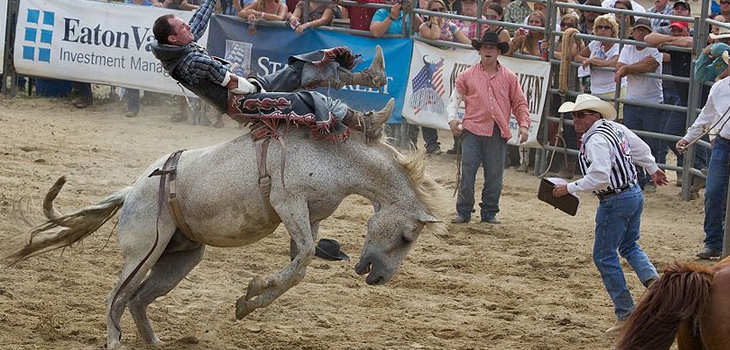
In Lubbock, Texas, the 76th annual ABC Pro Rodeo ran at the end of March. According to KCRD reporter Kase Wilbanks, athletic trainers, physicians, orthopedists, physical therapists and other medical experts were at the Lubbock rodeo. Many, he writes, will be stationed around the West to care for the rodeo workers. Helping finance the care is the Justin Boot Sports Medicine Team which has assisted rodeo athletes since its inception in 1980.
Mark Chisum was an athletic trainer for Texas Tech’s football and track teams for 20 years. Then he accepted an invitation to visit the Houston Rodeo as a trainer about 25 years ago and has been a part of that organization ever since.
“We have a lot of people like myself who are full-time athletic trainers who do rodeo events going from rodeo to rodeo just like the athletes do,” Chisum said.
Wilbanks writes that the goal of the medical professionals on the rodeo scene is to provide continuous care from one rodeo to another for athletes who travel from one contest to another. They need, he says, both preventative care as well as treatment for injuries. A computer database helps to keep up with teams of rodeo athletes.
“When I go to another rodeo and open up the computer, I learn about each athlete and learn what has happened to him and what’s going on,” Chisum said. “We want to keep them competing. Sometimes they don’t want to tell us about injuries, because they are trying to earn as much money as they can. At the end of September, the top 15 go to the national finals rodeo. They have been going all year long and they have a lot of wear and tear and bumps and bruises on their bodies.”
Some athletes wear helmets, Kevlar vests, mouth pieces and other gear. Chisum said his team works to educate athletes on how to take care of themselves. “They look at us as a positive resource, which makes you feel good because you’re taking care of guys that want to be taken care of.”
Author
React:
Discussion
This is a fascinating development. In my practice we've seen similar outcomes with the revised protocol. The key differentiator seems to be patient selection criteria. Has anyone else noticed the correlation with BMI thresholds?
Great point. I'd push back slightly on the conclusion, the sample size in the cited study is too small to draw population-level inferences. That said, the directional signal is compelling and worth a larger RCT.
We implemented a similar approach last year. Early results are promising but we're still gathering 12-month follow-up data. Happy to share our protocol if anyone is interested.
Join the conversation
Orthopedic professionals are discussing this. Sign in and upgrade to read every comment and add your voice.