
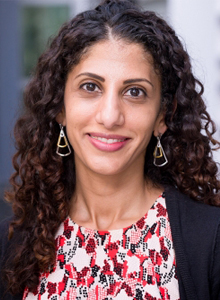
Nelly Andarawis-Puri, Ph.D., has been presented with the 2018 Kappa Delta Young Investigator Award for her research in tendon disease or injury and the healing response.
Nelly Andarawis-Puri, Ph.D. Wins Young Investigator Award
2 min read Premium comments
#nellyandarawispuri#orthopaedicresearchsociety#tendoninjuries
Dr. Andarawis-Puri is a Clare Boothe Luce assistant professor at Cornell University, Nancy and Peter Meinig Family Investigator in the Life Sciences department and adjunct assistant scientist at the Hospital for Special Surgery in New York. Evan Flatow, M.D., Lasker professor of orthopedic surgery and president of Mount Sinai West in New York, was a co-author on the research.
“The structure of the tendon has everything to do with the capacity to function,” said Dr. Andarawis-Puri. “The overall failure rate in tendon repair is high because patients heal with scaring which doesn’t have mechanical integrity.”
“No matter how far we advance in surgical techniques, if we’re working with scar tissue it will always haunt us. However, if we can modify the structure or recreate an environment for the cell that is needed for remodeling, then we can produce better outcomes.”
Asked about the most standout biomechanical aspects of her work, Dr. Andarawis-Puri told OTW, “Our finding that fatigue damage accumulates in the tendon so readily and does not naturally repair helps explain the clinical progression of chronic tendon injuries.”
“I would also say that the fact that we have discovered scenarios wherein physiological loading, in the form of exercise, can promote repair of these fatigue injuries or alternatively, lead to further degeneration, opens up a world of diagnostics to ultimately guide a clinician as to when a tendon injury will be responsive to exercise and when it will further degenerate from exercise.”
As for what she is proud of, Dr. Andarawis-Puri noted, “I am most proud of my efforts and contributions to making the tendon field more collaborative. Enhancing collaboration is the best way to ensure that we can have the maximum impact possible on advancing therapeutics and patient satisfaction. My involvement along these efforts initiated a few years back, and has taken various forms, including co-chairing a special tendon conference in New York City, with the explicit goal of enhancing collaboration between early stage and established investigators, and engaging experts from outside of the tendon field. Most recently, I have been actively involved with the Tendon section of the Orthopaedic Research Society as the membership chair.”
Author
React:
Discussion
This is a fascinating development. In my practice we've seen similar outcomes with the revised protocol. The key differentiator seems to be patient selection criteria. Has anyone else noticed the correlation with BMI thresholds?
Great point. I'd push back slightly on the conclusion, the sample size in the cited study is too small to draw population-level inferences. That said, the directional signal is compelling and worth a larger RCT.
We implemented a similar approach last year. Early results are promising but we're still gathering 12-month follow-up data. Happy to share our protocol if anyone is interested.
Join the conversation
Orthopedic professionals are discussing this. Sign in and upgrade to read every comment and add your voice.