
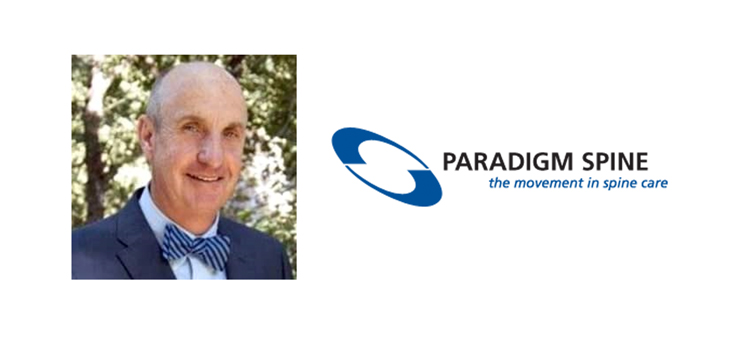
Francis Magee, D.V.M., one of the pioneers in motion preservation spine technologies and a 30+ year veteran of the science and art of medical device development, is the new Chief Technology Officer at Paradigm Spine, LLC. Dr. Magee will spearhead the product and technology development strategy and execution.
Francis Magee: New CTO at Paradigm Spine
1 min read Premium comments
#paradigmspineSecondary#francismagee
According to Paradigm, Dr. Magee “…has managed the successful commercialization of many Class 2 and Class 3 products in the U.S. and OUS [outside the United States], and was responsible for all functional areas, including design, development, regulatory, surgeon training and manufacturing. Previously, he served as the Chief Technology Officer for Orthologic, Spine Solutions and Synthes Spine, as well as the Head of Experimental Surgery at the Harrington Arthritis Research Center.”
“With published datasets of long-term Level 1 evidence from two prospective, randomized, controlled clinical studies, comparing coflex versus decompression plus fusion and more recently coflex versus decompression alone, we have entered a major inflection point for the company where we can conclusively show that coflex demonstrates composite clinical success for patients with spinal stenosis,” said Marc Viscogliosi, chairman and CEO of Paradigm Spine.
“Based on this, and the recent NASS [National Association of Spine Surgeons] Coverage Recommendation for coflex for interlaminar stabilization, it becomes of paramount importance to strengthen both our technology development and sales and marketing teams to help educate surgeons, practices, patients, their families and the broader spine community on coflex as the motion-preserving lumbar option.”
Dr. Magee commented to OTW, “The 30 years in the spine device business has prepared me; coflex makes me delighted to be involved with such an innovative product providing patients with an alternative to fusion for lumbar spinal stenosis that gets them back to their active lifestyle with great outcomes.”
Author
React:
Discussion
This is a fascinating development. In my practice we've seen similar outcomes with the revised protocol. The key differentiator seems to be patient selection criteria. Has anyone else noticed the correlation with BMI thresholds?
Great point. I'd push back slightly on the conclusion, the sample size in the cited study is too small to draw population-level inferences. That said, the directional signal is compelling and worth a larger RCT.
We implemented a similar approach last year. Early results are promising but we're still gathering 12-month follow-up data. Happy to share our protocol if anyone is interested.
Join the conversation
Orthopedic professionals are discussing this. Sign in and upgrade to read every comment and add your voice.