
The FDA has given Pacira Pharmaceutical Inc. permission to add a new indication for Exparel (bupivacaine Liposome injectable suspension) for use as an interscalene brachial plexus nerve block to produce post-surgical regional analgesia following shoulder surgery in adults to its label.
FDA Approves Shoulder Indication for Exparel
3 min read Premium comments
#shouldersurgery#postoperativepainSecondary
Shoulder Surgery Indication
The agency said on April 6, 2018 that the indication is being approved based on the results of one multicenter clinical study, “which demonstrated that the product is safe and effective” for use to provide post-surgical regional analgesia for shoulder surgeries, such as total shoulder arthroplasty and rotator cuff repair.
“Today’s action helps to fulfill a need for additional nonaddictive pain management tools by providing a new option for certain patients that can last up to 72 hours following surgery,” said Douglas Throckmorton, M.D., deputy center director for regulatory programs in the FDA’s Center for Drug Evaluation and Research.
However, after an FDA advisory committee meeting in February, the agency determined that the clinical trial data was “not sufficient” to support the general use of Exparel for regional nerve blocks for post-surgical analgesia other than shoulder surgery.
Exparel was approved in 2011 for local administration to provide post-surgical analgesia. In 2013, the product won one of OTW’s Best New Spine Technology Awards.
Exparel
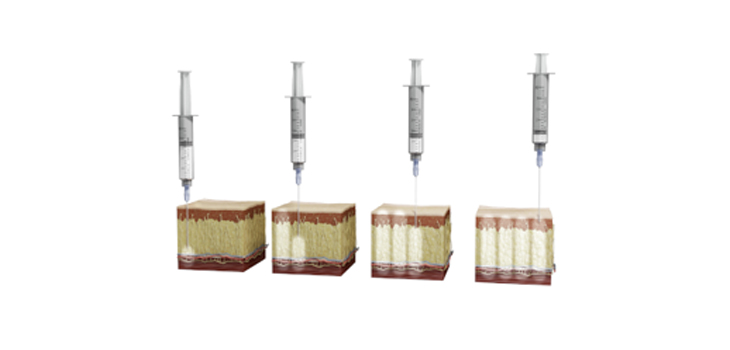
The product is a single administration liposomal formulation of bupivacaine. Its purpose is to reduce post-operative pain. It works by extending bupivacaine’s pain-relieving ability for 24 – 48 hours. And it does this by encapsulating bupivacaine in a form of phospholipid (fat globules) known as multivesicular liposome or DepoFoam.
Multivesicular liposomes have been used for decades to affect a controlled release of nutrients or drugs in many applications.
Label Updates
Gary Nachman, an analyst with BMO Capital Markets, noted these updates to the Exparel label:
- New indication is “single-dose infiltration in adults to produce postsurgical local analgesia and as an intrascalene brachial plexus nerve block (NB) to produce postsurgical regional analgesia” versus Pacira’s proposed “single-dose infiltration to produce local analgesia and as a NB to produce regional analgesia”.
- NB indication was limited specifically to the brachial plexus block for upper extremity procedures (e.g., shoulder) based on a single positive Ph3 study; label indicates that safety/efficacy has not been established in other NBs, and provides detailed data from two femoral NB studies in TKA and an intercostal NB study for thoracotomy highlighting that they do not support a NB indication in those areas.
- Label describes amount of reduction in opioid consumption over 72 hours post-surgery when using Exparel observed in some of the studies, but also stresses where statistically significant that differences from placebo were small and that the clinical benefit from these has not been established.
- Adverse Reactions portion of label was meaningfully expanded to include data from all NB studies and is noteworthy for its level of detail, although it doesn’t appear there are major issues at the lower approved dose for intrascalene brachial plexus NB (Pacira indicated safety profile is consistent with infiltration use).
- Expanded label enables Pacira to promote Exparel to anesthesiologists, an important segment of the market; while NB indication is limited to upper extremities, Pacira believes brachial plexus blocks will account for >60% of all regional NB procedures within next two years.
Pacira and FDA History
Pacira and the FDA have had a tortuous history when it comes to labeling and off-label promotions.
After receiving approval in 2011, the company wanted a supplement to their label that showed the drug was not limited to a specific surgery.
The FDA threatened Pacira with a warning in 2014 over the company’s promotional materials. The agency said those materials violated the off-label promotion prohibition.
The company sued the agency in September 2015 citing the First Amendment and Amarin case where a federal court ruled that companies had the constitutional right to speak truthfully about its products.
In a letter to the company on December 14, 2015, the agency wrote that after further review, the agency had concluded that the drug’s approval wasn’t limited to two types of surgeries.
Author
React:
Discussion
This is a fascinating development. In my practice we've seen similar outcomes with the revised protocol. The key differentiator seems to be patient selection criteria. Has anyone else noticed the correlation with BMI thresholds?
Great point. I'd push back slightly on the conclusion, the sample size in the cited study is too small to draw population-level inferences. That said, the directional signal is compelling and worth a larger RCT.
We implemented a similar approach last year. Early results are promising but we're still gathering 12-month follow-up data. Happy to share our protocol if anyone is interested.
Join the conversation
Orthopedic professionals are discussing this. Sign in and upgrade to read every comment and add your voice.