
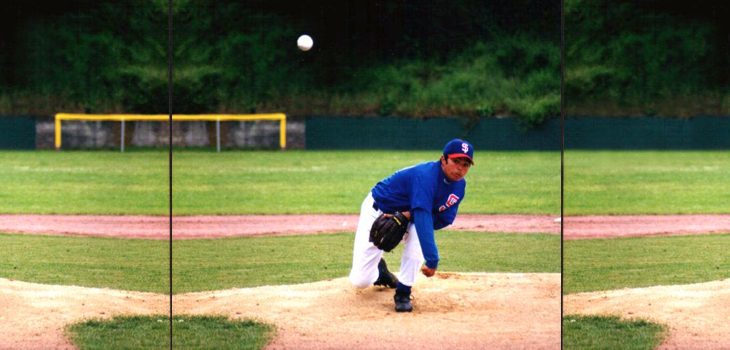
Excessive pitch counts and year-round pitching are known risk factors for overuse throwing injuries in high school baseball, but despite sports medicine physicians and coaches keeping a more watchful eye on the pitch count of their pitchers, the number of pitching injuries has not decreased.
Can Extra Pitches Increase Injury Risk?
1 min read Premium comments
Secondary
A recent study, “Unaccounted Workload Factor: Game-Day Pitch Counts in High School Baseball Pitchers – An Observational Study,” published on April 6, 2018 in the Orthopaedic Journal of Sports Medicine, investigated whether or not there were extra pitches during warm-up and bullpen activity that were not being included in the monitoring.
The researchers hypothesized that approximately 30% to 40% of pitches thrown off a mound by high school pitchers during a game-day outing were not included in current data. During this observational study, they counted all pitches thrown off a mound during varsity high school baseball games played by 34 high schools in North Central Florida during the 2017 season.
According to the data, they recorded 13,769 total pitches during 115 varsity high school baseball starting pitcher outings. The mean ±Standard Deviations (SD) pitch numbers per game were calculated for bullpen activity (27.2±9.4), warm-up (23.6±8.0), live games (68.9±19.7) and total pitches per game (119.7±27.8). In total, 42.4% of the pitches were unaccounted for in the pitch count monitoring of these players.
The researchers wrote, “In high school baseball players, pitch count monitoring does not account for substantial volume of pitching that occurs during warm-up and bullpen activity during the playing season. These extra pitches should be closely monitored to help mitigate the risk of overuse injury.”
Author
React:
Discussion
This is a fascinating development. In my practice we've seen similar outcomes with the revised protocol. The key differentiator seems to be patient selection criteria. Has anyone else noticed the correlation with BMI thresholds?
Great point. I'd push back slightly on the conclusion, the sample size in the cited study is too small to draw population-level inferences. That said, the directional signal is compelling and worth a larger RCT.
We implemented a similar approach last year. Early results are promising but we're still gathering 12-month follow-up data. Happy to share our protocol if anyone is interested.
Join the conversation
Orthopedic professionals are discussing this. Sign in and upgrade to read every comment and add your voice.