
Adult Spinal Deformity Guidelines
Adult Spinal Deformity Guidelines; Study: Knee Stability Tied to Medial Line; Deformity Surgery Costs Much Higher in U.S.
5 min read Premium comments
#totalkneearthroplasty#adultspinedeformity#tka
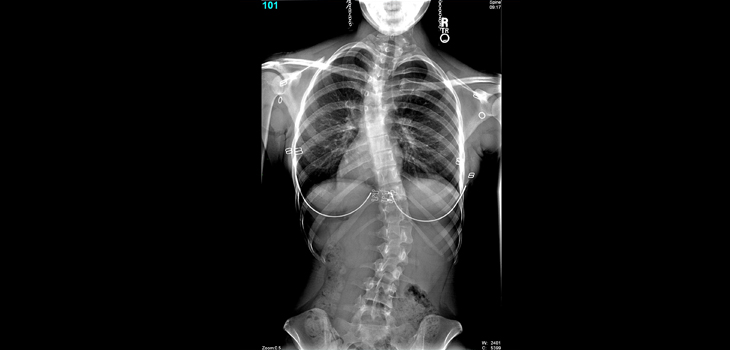
To standardize the evaluation and treatment of adult spinal deformity (ASD), an international team of researchers has published new work titled, “An international consensus on the appropriate evaluation and treatment for adults with spinal deformity.” The article appears in the March 2018 edition of the European Spine Journal.
Sigurd Berven, M.D., chief of Spine Service at the University of San Francisco and co-author told OTW, “The topic is important and of interest because there is significant variability in the evaluation and treatment of adults with spinal deformity.”
“This variability reflects the absence of an evidence-based approach to care. A consensus of international experts offers the opportunity to identify evaluation strategies and treatment options that are clearly appropriate or inappropriate. The absence of a consensus also highlights areas that are important as a focus for future prospective investigation.”
“The study design was a modified Delphi survey including input from a panel of 53 experienced deformity surgeons from 24 countries. Through the AO knowledge forum, we have been able to bring together surgeons from around the world and learn from one another and develop evidence-based approaches to care that reflect the combined perspectives of a broad spectrum of experienced surgeons.”
“The surgeons rated the appropriateness of management strategies for multiple ASD clinical scenarios using the RAND/UCLA Appropriate Use Criteria system. Appropriate Use Criteria is a useful technique to identify evidence-based approaches to quite specific scenarios with variation of quite granular details.”
“Our study demonstrated that there is significant agreement on the appropriateness of specific surgical goals in adult deformity, including improvement of function, pain, and neural symptoms.”
“The panel agreed that preoperative evaluations with advanced imaging, and preoperative optimization of specific risk factors for poor outcome is important in patients with adult deformity.”
“Regarding intraoperative strategies, the panel agreed on the priority of sagittal plane alignment in deformity, and on the importance of pelvic fixation in long fusions.”
“The panel also agreed that surgical strategies that involve decompression without realignment are inappropriate for patients with large, and progressive deformity.”
“Other surgical strategies including the role of cement augmentation, postoperative chemoprophylaxis, and the role of limited vs extensive fusions had less agreement between experts and are therefore areas that may be appropriate for future research.”
“This work empowers surgeons to develop evidence-based protocols regarding preoperative optimization of patients prior to surgery, intraoperative standardization regarding techniques, and postoperative accountability regarding the result of care. The paper is useful for surgeons who seek to adopt optimal strategies for management of patients with adult deformity.”
“We would like for orthopedic and neuro surgeons to recognize that there is not a monolithic or dogmatic approach to the management of adult spinal deformity.”
“There are many areas regarding surgical strategies and approaches to care in which many alternatives many be appropriate. It is also important to recognize specific strategies that may be optimal, or in some cases inappropriate, for the management of quite specific scenarios.”
“The goal of the paper is to promote consensus in an evidence-based approach to optimal care.”
Study: Knee Stability Tied to Medial Line
A group of Belgian researchers has found that the level of the medial joint line is the key prerequisite for normal joint stability. Their study, “Raising the Joint Line in TKA is Associated With Mid-flexion Laxity: A Study in Cadaver Knees,” appears in the March 2018 edition of Clinical Orthopaedics and Related Research.
Thomas Luyckx, M.D., Ph.D., with the Department of Orthopaedic Surgery at University Hospitals Leuven in Belgium, co-author on the study told OTW, “We have the experience that instability after primary TKA [total knee arthroplasty] is an important clinical problem. In fact, instability has become the number one reason for early revisions.”
“It can be considered a technical problem and as such one that can be avoided. We wanted to add to the understanding of the causes of this instability and how to try to avoid them.”
“In this cadaveric study, a TKA prosthesis was implanted in 10 fresh frozen nonarthritic cadaveric knees with restoration of the medial joint line at its original level (TKA0). Coronal plane stability was measured at 0°, 30°, 60°, 90°, and 120° flexion using a navigation system while applying an instrumented 9.8 Nm varus and valgus force moment. The joint line then was raised in two steps by re-cutting the distal and posterior femur by an extra 2 mm (TKA2) and 4 mm (TKA4), downsizing the femoral component and, respectively, adding a 2- and a 4-mm thicker insert.”
“When the joint line is raised, a significant mid-flexion laxity was observed. This effect was quite strong. A 50% increase in laxity with 2mm raised joint line and 100% with 4mm raise. This instability occurred even though the flexion and extension gap remained equal and balanced.”
“If you want to keep the joint line at its original level in an osteoarthritic knee, you have to consider cartilage wear. Typically, there is loss of 2mm of distal medial femoral cartilage. If you don’t compensate for this, you automatically raise the joint line. You also create a mismatch of the extension gap with the flexion gap because in most cases the posterior medial cartilage is still present.”
“The most important finding is that if you want to maintain the normal coronal plane stability of the knee, you have to keep the medial joint line at its original level, both in extension and flexion. The level of the medial joint line seems to be the essential pre-requisite for normal joint stability.”
Deformity Surgery Costs Much Higher in U.S.
An international team of researchers has just published their retrospective analysis comparing the direct costs and cost-effectiveness of adult spinal deformity (ASD) surgery in the U.S. and Japan. Their work, “A cost-effectiveness comparisons of adult spinal deformity surgery in the United States and Japan,” was published in the March 2018 edition of the European Spine Journal.
Mitsuru Yagi, M.D., Ph.D., with the Department of Orthopedic Surgery at the Keio University School of Medicine in Tokyo, Japan, and lead author of the article, told OTW, “Most spine surgeons have found increasing cost and higher complication rate associated with adult spine deformity surgery in recent years. Therefore, cost analysis, as well as cost effectiveness analysis, has become important in this research field.”
The authors wrote, “Retrospective analysis of 76 U.S. and 76 Japan (JP) patients receiving surgery for ASD with ≥2-year follow-up was identified. Data analysis included preoperative and postoperative demographic, radiographic, health-related quality of life (HRQOL), and direct cost for surgery. An incremental cost-effectiveness ratio (ICER) was determined using cost/quality-adjusted life years (QALY). The cost/QALY was calculated from the 2-year cost and HRQOL data.”
Dr. Yagi told OTW, “As you may know the health insurance system is totally different between the U.S. and Japan. Therefore, it was difficult to directly compared the cost effectiveness between these countries.”
“Although the direct costs and cost-effectiveness of ASD surgery in the U.S. vs JP demonstrated that the total direct costs and cost/QALY were substantially higher in the U.S. than JP, appropriate patient selection and minimizing the complication and reapportion may improve the cost-effectiveness in ASD surgery.”
“Appropriate patient selection and minimizing the complication and reapportion are particularly important not only to improve the cost effectiveness but also improve the clinical outcomes as well as patient satisfactions in ASD surgery.”
Author
React:
Discussion
This is a fascinating development. In my practice we've seen similar outcomes with the revised protocol. The key differentiator seems to be patient selection criteria. Has anyone else noticed the correlation with BMI thresholds?
Great point. I'd push back slightly on the conclusion, the sample size in the cited study is too small to draw population-level inferences. That said, the directional signal is compelling and worth a larger RCT.
We implemented a similar approach last year. Early results are promising but we're still gathering 12-month follow-up data. Happy to share our protocol if anyone is interested.
Join the conversation
Orthopedic professionals are discussing this. Sign in and upgrade to read every comment and add your voice.