
Texas-based 4WEB Medical recently announced at the annual meeting of the International Society for the Advancement of Spine Surgery (ISASS) that the company has exceeded 30,000 implants of its Truss Implant Technology worldwide.
4WEB Medical: More Than 30,000 Implants
1 min read Premium comments
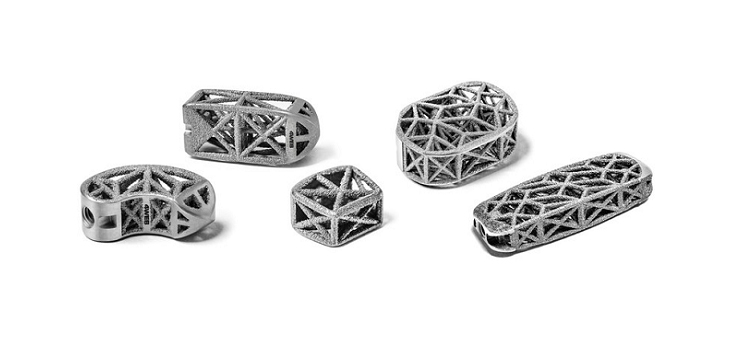
Secondary#4web#spinetrusssystem
Jessee Hunt, 4WEB President and CEO, said, “We are extremely excited to reach the 30,000-implant milestone with over 650 surgeons having utilized our Truss Implant Technology in just 5 years.”
“The 3D printed implant market has seen exponential growth since 4WEB obtained the first FDA approval for a 3D printed spine implant in 2012. Numerous companies have now launched 3D printed implants, but 4WEB has maintained its differentiation in the market due to a lack of design innovation from these new implant manufacturers.”
“Their focus seems to be on micro-porous structures, which are basically a rebrand of the trabecular/porous metal designs from the late ‘90s. This is unfortunate as micro-porous metal is intended for fixation rather than fusion. We are proud to offer surgeons a one of a kind open architecture design that improves surgical outcomes in a continually expanding marketplace.”
Jim Bruty, senior VP of Sales and Marketing, told OTW, “We know that the Posterior Spine Truss System (PSTS) is a unique product line that is getting attention and surgeon adoption in a highly competitive market.”
“Our sustained growth validates this and we are very proud of our continued success. The PSTS expansion further accommodates all patient anatomies with the addition of a 12-degree lordotic implant and a larger variety of sizes and footprints to aid in spinal alignment and sagittal balance. 4WEB Medical offers the most comprehensive portfolio of spine implants in the 3D printed titanium implant market with 5 years of clinical experience.”
Author
React:
Discussion
This is a fascinating development. In my practice we've seen similar outcomes with the revised protocol. The key differentiator seems to be patient selection criteria. Has anyone else noticed the correlation with BMI thresholds?
Great point. I'd push back slightly on the conclusion, the sample size in the cited study is too small to draw population-level inferences. That said, the directional signal is compelling and worth a larger RCT.
We implemented a similar approach last year. Early results are promising but we're still gathering 12-month follow-up data. Happy to share our protocol if anyone is interested.
Join the conversation
Orthopedic professionals are discussing this. Sign in and upgrade to read every comment and add your voice.