
Stem cells and lizard tails are the focus of research at three Arizona institutions where researchers hope to get new clues on exactly how the amazing ability of lizards to regenerate their tails can teach scientists about how stem cells promote nerve regrowth.
Stem Cells and Lizard Tails
2 min read Premium comments
Secondary#stemcells#nerveregrowth#satellitecells
The group of researchers pursuing this line of inquiry hail from Arizona State University, the University of Arizona College of Medicine-Phoenix and Victor Chang Cardiac Research Institute.
One group of investigators looked at the role of a muscle stem cell population called “satellite” cells. Regeneration involves making new muscle, cartilage and tendons and requires cells that will become these tissues in a regrown tail.
“Satellite cells are a unique stem cell population that allows humans to grow and repair muscle tissue,” said senior author Jeanne Wilson-Rawls, Ph.D., associate professor with ASU School of Life Sciences.
“Mammals, including mice and humans, have muscles that contain these cells. After an injury, these satellite cells can repair the remaining muscle, but they cannot replace lost muscle in humans, unlike in lizards. While both cell types can differentiate into muscle, only lizard satellite cells can turn on the genes and proteins required to make cartilage.” she said.
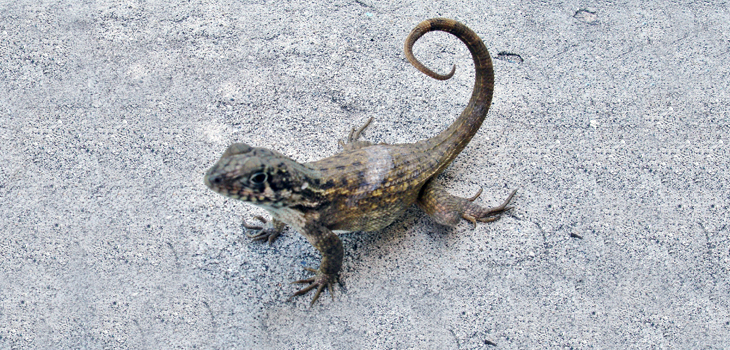
The researchers found that the muscle satellite cells in green anole lizards do double duty and can become cartilage as well. This study provides the first functional description of this stem cell population in lizards.
“Using cell culture techniques, we found that lizard satellite cells behave the same as mouse satellite cells,” said Joanna Palade, lead author of the first paper and graduate student in the ASU molecular and cellular biology graduate program.
By studying the genetic programming in mice and lizards, the researchers hope to find the differences between them that make the lizard more capable of regeneration.
“Lizards and humans have most of the same genes,” said Kenro Kusumi, Ph.D., co-author of the study. “Working with expert computer scientists, we found the genes that control cartilage formation were turned on in lizard but not mouse satellite cells, pointing to the existence of a possible switch that must be activated before regenerative therapies can begin.”
The research, “Developmental and adult-specific processes contribute to de novo neuromuscular regeneration in the lizard tail,” appears in the January 2018 issue of Developmental Biology.
Author
React:
Discussion
This is a fascinating development. In my practice we've seen similar outcomes with the revised protocol. The key differentiator seems to be patient selection criteria. Has anyone else noticed the correlation with BMI thresholds?
Great point. I'd push back slightly on the conclusion, the sample size in the cited study is too small to draw population-level inferences. That said, the directional signal is compelling and worth a larger RCT.
We implemented a similar approach last year. Early results are promising but we're still gathering 12-month follow-up data. Happy to share our protocol if anyone is interested.
Join the conversation
Orthopedic professionals are discussing this. Sign in and upgrade to read every comment and add your voice.