
There have been less serious injuries for sports medicine doctors to treat in National Collegiate Athletic Association (NCAA) basketball due to better safety regulations according to a new study “Injuries sustained in National Collegiate Athletic Association men’s and women’s basketball, 2009/2010-2014/2015,” which was published in the February 2018 issue of the British Journal of Sports Medicine.
NCAA Basketball Rule Changes Good for Docs
1 min read Premium comments
#anklesprainsSecondary#lowerextremity#basketball
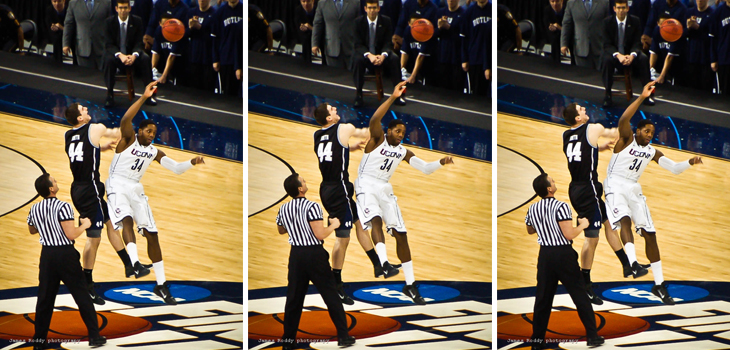
In the study, researchers from the Datalys Center for Sports Injury, Research and Prevention, Vanderbilt University and the University of California Davis, wanted to see whether rule changes made for player safety like prohibiting sponsor stickers and other court marking from changing the consistency of the court floor to the creation of a restricted area arc near the center of the basket to prevent athlete collisions, are making a difference in the number and type of injuries during the season.
To do so, they investigated the epidemiology of injuries in men’s and women’s NCAA 2009/2010 to 2014/2015 basketball seasons. An injury was considered reportable if it occurred during organized practice or competition and required attention from an athletic trainer or a physician.
Using data from the NCAA Injury Surveillance Program (NCSS-ISP) from 78 men’s and 74 women’s NCAA basketball programs, a total of 2,308 and 1,631 injuries were reported in men’s and women’s basketball, respectively, for injury rates of 7.97 and 6.54/1,000 athlete-exposures (AEs). The researchers found that the rate was higher in men than women (RR = 1.22; 95% C, 1.15 to 1.30).
In addition, non-time-loss (NTL) injuries accounted for 64.8% and 53.6% of men’s competition and practice injuries, and 53.9% and 51.3% of women’s competition and practice injuries, respectively. Non-time-loss injuries are injuries that result in less than 24-hour sport participation restriction time. The most common injuries were those to the lower extremity, especially ankle sprains, which were 17.9% and 16.6% of all reported injuries in men and women, respectively.
The researchers wrote, “While rule changes have been implemented to make basketball safer, continued research is needed to assess the effectiveness of these changes.”
Author
React:
Discussion
This is a fascinating development. In my practice we've seen similar outcomes with the revised protocol. The key differentiator seems to be patient selection criteria. Has anyone else noticed the correlation with BMI thresholds?
Great point. I'd push back slightly on the conclusion, the sample size in the cited study is too small to draw population-level inferences. That said, the directional signal is compelling and worth a larger RCT.
We implemented a similar approach last year. Early results are promising but we're still gathering 12-month follow-up data. Happy to share our protocol if anyone is interested.
Join the conversation
Orthopedic professionals are discussing this. Sign in and upgrade to read every comment and add your voice.