
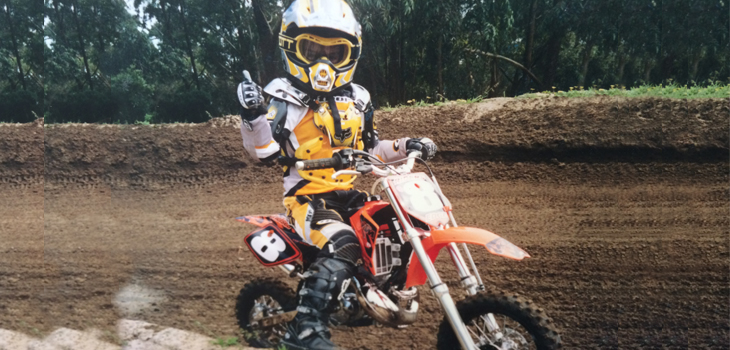
Is motocross, a sport involving racing motorized bikes on rough terrain at high speeds, safe for children and adolescents? This is a question that was raised in a new review article, “Motocross Injuries in Pediatric and Adolescent Patients,” published in the March 2018 issue of the Journal of the American Academy of Orthopaedic Surgeons.
New Study Warns Against Dangers of Motocross for Kids
2 min read Premium comments
Secondary#musculoskeletalinjuries#motocross
Motocross has become a very popular sport in the U.S. for children and adults alike, but according to this recent review of motocross injuries, it may not be a sport that everyone can safely do.
According to the data collected on patients ranging in age from about 5 to 18 years, the most common motocross injuries were to the bones and joints and many of them require surgery. Overall 249 patients required 299 treatment episodes over a seven-year period and 95% of the injuries were musculoskeletal.
The most common injuries were to the forearm (15.4%), collarbone (10%), femur or thighbone (9.7%) and proximal tibia (10%).
“When weighing the benefits of the sport for adolescents, parents should be aware of the potential risk of severe injury, and factor in the missed academic time and cost of medical treatment,” Amy L. McIntosh, M.D., lead author of the review article and orthopedic surgeon at Scottish Rite Hospital in Dallas, Texas, said in a release.
Another study that McIntosh and colleagues looked at as part of the review focused on concussions in motocross. In that study, 48% of youth riders who participated in one four-month season experienced at least one episode of concussion symptoms and 78% of these riders received medical treatment and were out of competition for about two to three weeks. Twenty-four percent of symptomatic riders however continued to compete until the end of the season.
“Recognizing a concussion is essential to timely treatment, McIntosh said. “Parents and coaches should be aware of concussion symptoms, and riders should avoid racing while experiencing these symptoms to prevent further injuries. After recovering from a concussion, riders should participate in supervised, progressive return-to-ride programs before returning to competitive racing.”
Because of a high risk for severe and fatal injuries to children who ride two-wheeled motorized vehicles, McIntosh and colleagues recommend that more robust training is needed as well as increased safety measures.
They explained that the level of physical and emotional skill level required to participate safely in this sport is not possible for most children and that a child or adolescent’s physical development, strength, coordination, emotional maturity and judgement should be thoroughly assessed before he or she is allowed to compete.
Author
React:
Discussion
This is a fascinating development. In my practice we've seen similar outcomes with the revised protocol. The key differentiator seems to be patient selection criteria. Has anyone else noticed the correlation with BMI thresholds?
Great point. I'd push back slightly on the conclusion, the sample size in the cited study is too small to draw population-level inferences. That said, the directional signal is compelling and worth a larger RCT.
We implemented a similar approach last year. Early results are promising but we're still gathering 12-month follow-up data. Happy to share our protocol if anyone is interested.
Join the conversation
Orthopedic professionals are discussing this. Sign in and upgrade to read every comment and add your voice.