
Sports injury not only affects an athlete’s health, but can also be an economic burden as well when the road to recovery is long and complicated. That is why researchers at the University of Tennessee Chattanooga in their study, “Mitigating sports injury risks using Internet of Things and analytic approaches,” published in the journal Risk Analysis, decided to seek a better way of identifying individual athletes’ risk of injury.
New Study Offers Framework for Individualizing Injury Risk
2 min read Premium comments
Secondary#injuryriskprediction#journalriskanalysis
The researchers developed a framework that measures an athlete’s risk using Internet of Things (IoT) technology. The injury risk screening procedures are administered using wireless devices that are connected to a cloud server. This connection between phones, computers and other devices is what the researchers mean when they refer to the Internet of Things.
Both an athlete’s previous injury history and injury surveillance data, including longitudinal tracking of exposure to game conditions, gathered by the phones and devices are used to create a real-time “dashboard” of the athlete’s status.
Currently the most common way to measure injury risk is with the Functional Movement Screen which is a subjective test based on observation of the athlete’s ability to complete certain movements. With this new framework, however, self-reports are combined with more objective measurements to identify an individual athlete’s risk.
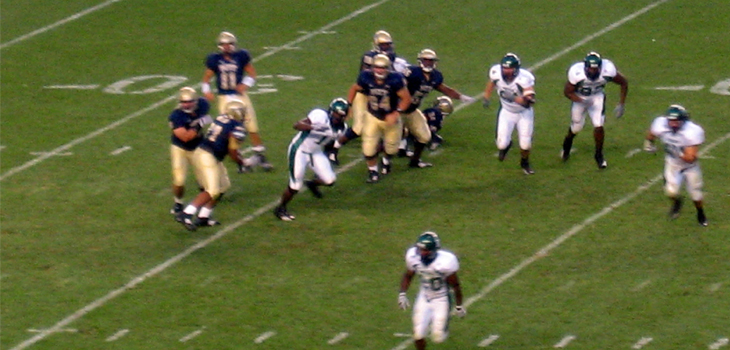
During the study, the researchers tracked 43 players from a National Collegiate Athletic Association (NCAA) Division I-Football Championship Subdivision (FSC) football team from one month before the start of preseason to the end of the season. They found that athletes who played at least eight games had more than three times greater odds of injury occurrence than those who played fewer than eight games. Forty-two percent of those athletes who had at least one risk factor sustained an injury during the season.
According to Gary B. Wilkerson, EdD, ACT, lead author and professor in a graduate athletic training program in a press release, creating a risk profile for individual athletes can help tailor the training program to their specific needs to better prevent injury.
He also added, “The results also provide a useful estimation of the odds of injury occurrence for each athlete during the subsequent season,” said in a press release.
Wilkerson and colleagues hope that this data can help reduce the economic, emotional and physical toll of sports injuries.
Author
React:
Discussion
This is a fascinating development. In my practice we've seen similar outcomes with the revised protocol. The key differentiator seems to be patient selection criteria. Has anyone else noticed the correlation with BMI thresholds?
Great point. I'd push back slightly on the conclusion, the sample size in the cited study is too small to draw population-level inferences. That said, the directional signal is compelling and worth a larger RCT.
We implemented a similar approach last year. Early results are promising but we're still gathering 12-month follow-up data. Happy to share our protocol if anyone is interested.
Join the conversation
Orthopedic professionals are discussing this. Sign in and upgrade to read every comment and add your voice.