
Gregory B. Maletis, M.D., chief of orthopaedics at the Kaiser Baldwin Park Medical Facility in California and clinical professor of orthopaedic surgery in the Keck/USC School of Medicine, has won the 2018 Orthopaedic Research and Education Foundation (OREF) Clinical Research Award.
Gregory Maletis, M.D. Wins 2018 OREF Clinical Research Award
2 min read Premium comments
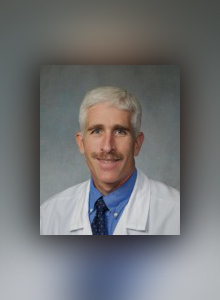
#oref#gregorymaletis
This honor has been bestowed for his research titled “Optimizing Anterior Cruciate Ligament Reconstruction: Individualizing the Decision Making Process Using Data from the Kaiser Permanente ACLR [anterior cruciate ligament reconstruction] Registry.”
According to the American Academy of Orthopaedic Surgeons, “The researchers found that patients who were less than 21 years old had a 7.76 times higher risk of revision than those over 40 years old, and that graft type, gender, BMI [body mass index] and race were associated with the risk of revision in this age group. Additionally, graft type played a significant role in the risk of revision surgery, with allografts having a higher risk of revision in age groups 40 years old and younger.”
Dr. Maletis told OTW, “There are many factors that affect the outcomes of ACL reconstruction, but few factors are under the surgeons control.”
“One factor that the surgeon does have control of is the graft used for reconstruction. Not all grafts perform equally well for all patients. Determining which graft is most appropriate for a specific patient can be challenging. By using the patient’s age, BMI, and the sport they participate in, the risk calculator that we have developed can help patients and surgeons predict the probability of graft survival based on which graft is used for reconstruction. We hope that this helps to individualize care for patients undergoing ACLR surgery.”
“We believe that choosing the most appropriate graft for a specific patient will ultimately improve patient care. Our group, as well as others, have shown that younger patients are at the greatest risk for revision after ACLR surgery.”
“By choosing an autograft rather than an allograft, the risk of revision can be decreased. We hope that the clinical impact of our research will be that graft choice makes a difference in the overall risk of revision and that we have helped provide tools for surgeons and patients to make an informed choice.”
“Furthermore, we have demonstrated that practice change can occur in a large institution. Within our organization we have seen a nearly 70% decrease in allograft usage in patients 21 years of age and younger. Our experience shows that by informing surgeons with data regarding good and poor performing grafts and providing them with their own personal outcome data, patient care can be improved.”
Author
React:
Discussion
This is a fascinating development. In my practice we've seen similar outcomes with the revised protocol. The key differentiator seems to be patient selection criteria. Has anyone else noticed the correlation with BMI thresholds?
Great point. I'd push back slightly on the conclusion, the sample size in the cited study is too small to draw population-level inferences. That said, the directional signal is compelling and worth a larger RCT.
We implemented a similar approach last year. Early results are promising but we're still gathering 12-month follow-up data. Happy to share our protocol if anyone is interested.
Join the conversation
Orthopedic professionals are discussing this. Sign in and upgrade to read every comment and add your voice.