
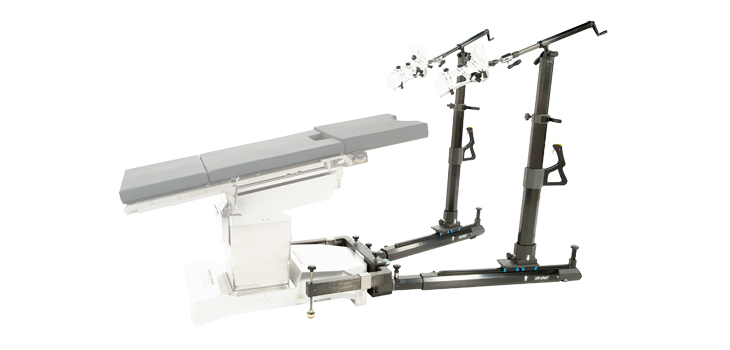
Stryker Corporation, based in Kalamazoo, Michigan, has just launched the industry’s first-ever, post-free hip distraction system, Pivot Guardian Distraction System, which, says the company in its March 6, 2018 news release, is “…designed to mitigate groin complications and heel slip associated with hip arthroscopy and improve patient outcomes.”
First Post-Free Distraction for Hip Arthroscopy Announced
1 min read Premium comments
#strykerSecondary#hip#pivotguardian
Stryker cites a recent study titled, “Hip Distraction Without a Perineal Post: A Prospective Study of 1000 Hip Arthroscopy Cases,” which appears in the December 15, 2017 edition of the American Journal of Sports Medicine.
According to Matt Moreau, Stryker’s sports medicine vice president and general manager, “Complications around the perineal post and current boot technology are well documented, so we are excited to offer surgeons a new option to address their clinical needs in hip arthroscopy.”
“Stryker is committed to advancing the procedure, so we worked with the inventing surgeon to develop a post-free solution that enables surgeons to create adequate force for distraction without applying pressure to the groin while mitigating heel slip and excessive pressure applied to the foot.”
“In addition, the Pivot Guardian Distraction System increases intraoperative range of motion, enables more flexible c-arm positioning, and presents surgeons with the opportunity to consider more bilateral hips scopes in their practice.”
We asked Omer Mei-Dan, M.D. an orthopedic surgeon with the University of Colorado School of Medicine and co-author about the typical groin complications that this technology addresses. He told OTW: “These include impotence, penile and vaginal numbness (temporary or permanent), vaginal tears, scrotal necrosis, etc.”
“We used a designated load cell force measurements device we developed to be able to measure/record/document the force applied and correlate this to body habits, age, gender, pathology etc. There were ZERO groin related complications in >1,000 patients. But in a way this was expected. When you don’t drive a car there is no chance you will have a motor vehicle accident.”
Author
React:
Discussion
This is a fascinating development. In my practice we've seen similar outcomes with the revised protocol. The key differentiator seems to be patient selection criteria. Has anyone else noticed the correlation with BMI thresholds?
Great point. I'd push back slightly on the conclusion, the sample size in the cited study is too small to draw population-level inferences. That said, the directional signal is compelling and worth a larger RCT.
We implemented a similar approach last year. Early results are promising but we're still gathering 12-month follow-up data. Happy to share our protocol if anyone is interested.
Join the conversation
Orthopedic professionals are discussing this. Sign in and upgrade to read every comment and add your voice.