
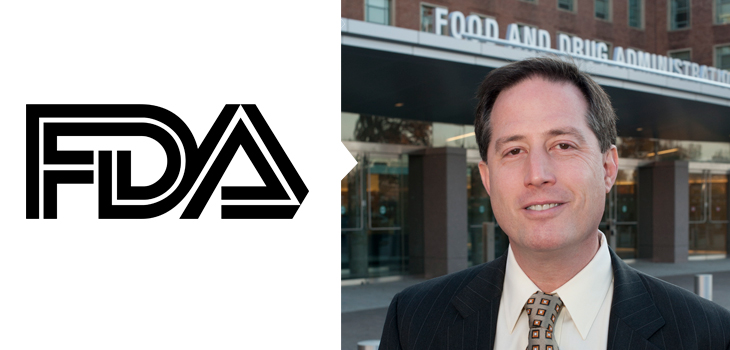
In an inaugural Research & Development spotlight hosted by Wells Fargo Securities, Jeff Shuren, M.D., director of the Center for Devices and Radiological Health at the Food and Drug Administration (FDA) updated Larry Biegelsen, a medical device analyst, and life science tools and diagnostics analyst Tim Evans on the ways the FDA has been working to expedite the approval process for medical devices without sacrificing important safety measures for the protection of patients.
FDA Chief Updates Wall Street Big Wigs
2 min read Premium comments
#fdaSecondary#wallstreet#jeffshuren
Shuren laid out the goals of Medical Device User Fee Amendments IV (MDUFA IV) which will continue the improvements started with the implementation of the MDUFA III. The new goals include a continued reduction in review times for Premarket Approval (PMA) and 510k products and new performance goals for de novo approvals and presubmission meetings.
He said the goal is to continue to build on the momentum from last year when the FDA approved 95 novel devices, which is the highest amount since the medical device program was established 40 years ago. He added that the approval rates for both PMAs and 510(k)s remain high.
Shuren also highlighted:
- The Breakthrough Device program which is intended to help patients have better access to devices and breakthrough technologies that provide more effective treatment for life-threatening or permanently debilitating diseases for which there are no approved treatments.
- A pilot abbreviated 510(k) pathway that uses set standards instead of predicate device for clearance.
Another area that the FDA is trying to streamline is the post market study, according to Shuren. A lack of overall compliance has limited the number of approvals of next generation devices in the past. To make data collection easier, the FDA is building the foundation for a National Evaluation System for Health Technology (NEST) to generate better evidence that can be used to evaluate medical devices.
The FDA has also started a pilot program with nine companies that will help improve post market data collection. Part of that process will be by linking to NEST. Shuren said that they will also be looking more closely at the concept of uncertainty and how much uncertainty they can accept while still having “reasonable assurance of safety and effectiveness” of the medical device.
Finally, Shuren emphasized that patient safety is always a priority and that there may be “a potential shift from a ‘passive’ surveillance system that relies on people to identify device-related problems to leveraging ‘big data’ and other software analytics to identify potential safety signals with medical devices.”
Author
React:
Discussion
This is a fascinating development. In my practice we've seen similar outcomes with the revised protocol. The key differentiator seems to be patient selection criteria. Has anyone else noticed the correlation with BMI thresholds?
Great point. I'd push back slightly on the conclusion, the sample size in the cited study is too small to draw population-level inferences. That said, the directional signal is compelling and worth a larger RCT.
We implemented a similar approach last year. Early results are promising but we're still gathering 12-month follow-up data. Happy to share our protocol if anyone is interested.
Join the conversation
Orthopedic professionals are discussing this. Sign in and upgrade to read every comment and add your voice.