
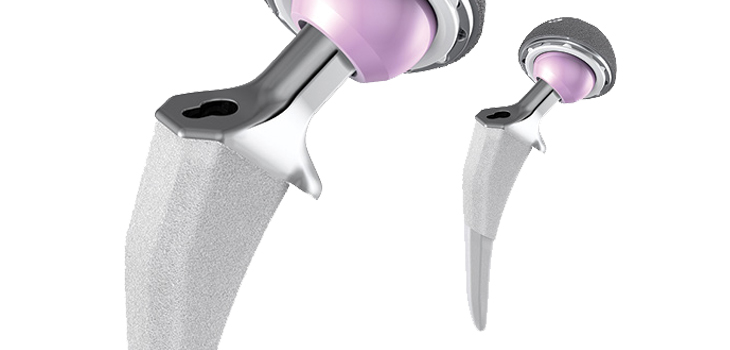
DePuy Synthes is making happier hips possible, with its recent launch of the ACTIS Total Hip System at the 2018 American Academy of Orthopaedic Surgeons (AAOS) annual meeting.
DePuy Synthes Launches ACTIS Total Hip System
2 min read Premium comments
Secondary#depuysynthes#hip##actistotalhipsystem
According to the company, “…this is the first DePuy Synthes hip system designed to be utilized with tissue-sparing approaches such as the minimally invasive Anterior Approach, as well as traditional approaches in Total Hip Replacement (THR) surgery.”
“The ACTIS Hip System incorporates features such as a medial collar, triple-taper geometry and twelve sizes to allow for a precise anatomical fit,” said Atul F. Kamath, M.D., Department of Orthopaedic Surgery, University of Pennsylvania. “I now have a single system for most patients’ bone types, shapes and anatomic considerations. I have been impressed with the early clinical results, stem fixation on X-rays and patient satisfaction.”
Polly Teevan, director NA Marketing for Hips and Shoulders, DePuy Synthes, told OTW, “The ACTIS hip is the first stem designed specifically for the anterior approach.”
“This is important because this trend is here to stay.”
“A 2016 survey of the American Association of Hip and Knee Surgeons found that one third of respondents are using the anterior approach and we are hearing that up to 8 out of 10 residents and fellows are choosing an anterior over a posterior approach.”
“We recognized this trend and have supported the anterior approach for more than 10 years through professional education and training, enabling technologies and solutions specific to the anterior approach.”
“The ACTIS femoral system is user friendly, with instrumentation that provides for simple anterior insertion. The medial collar allows greater stability than a non-collared stem, which is helpful to support the early return to function that anterior approach patients experience. The combination of the design features of the implant and the ease of use of the instruments provides surgeons with a great system for both their patients and themselves.”
Aaron Villaruz, global platform leader, hips, DePuy Synthes, commented to OTW, “What we’ve designed into the ACTIS hip, namely, is optimized length, triple taper geometry, and more. We know that surgeon adoption of minimally invasive techniques such as the anterior approach is growing. With the ACTIS hip, we are essentially meeting surgeons where they are rather than asking them to adjust to someone else’s priorities.”
“To date surgeons have implanted over 12,000 ACTIS systems. We have had a very methodical launch, starting with design surgeons then clinical investigators. The ACTIS hip is an important part of operating efficiently in today’s bundled care environment. The anterior approach can impact categories that make up 58% of the 90-day bundle, including improvements regarding readmission, length of stay, skilled nursing facilities, home care, and self-care.”
Author
React:
Discussion
This is a fascinating development. In my practice we've seen similar outcomes with the revised protocol. The key differentiator seems to be patient selection criteria. Has anyone else noticed the correlation with BMI thresholds?
Great point. I'd push back slightly on the conclusion, the sample size in the cited study is too small to draw population-level inferences. That said, the directional signal is compelling and worth a larger RCT.
We implemented a similar approach last year. Early results are promising but we're still gathering 12-month follow-up data. Happy to share our protocol if anyone is interested.
Join the conversation
Orthopedic professionals are discussing this. Sign in and upgrade to read every comment and add your voice.