
New York-based Paradigm Spine, LLC has announced publication of the ESCADA two-year trial results (European Study of coflex And Decompression Alone) in the January 2018 issue of the Journal of Neurosurgery Spine. The article is titled, “Prospective, randomized, multicenter study with 2-year follow-up to compare the performance of decompression with and without interlaminar stabilization.”
Decompression With coflex Extends Durability, Sustainability
2 min read Premium comments
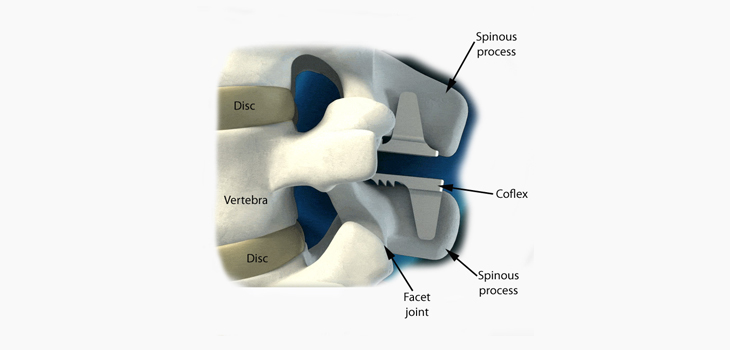
#coflex#paradigmspineSecondary#decompression#marcviscogliosi
According to the company, “ESCADA reports a prospective, randomized, controlled, multi-center trial comparing decompression alone to decompression with coflex Interlaminar Stabilization for treatment of moderate to severe lumbar spinal stenosis. A total of 225 patients were enrolled in the study with 91% follow up at 2 years.”
“Highlights of ESCADA results:
- The rate of patients achieving Composite Clinical Success was statistically superior in the coflex group vs. the Decompression Alone group (p=0.017)
- Patients who received Decompression Alone experienced significantly more loss of foraminal and posterior disc height maintenance compared to the coflex group (p<0.001)
- The Decompression Alone group experienced 228% more subsequent epidural steroid injections compared to the coflex group (p=0.0065)
- coflex patients experienced 2.4 times more improvement in walking distance measurements compared to Decompression Alone patients (p=0.062)
- At 24 months, the Decompression Alone group was 1.4 times more likely to be taking opioids compared to the coflex group”
Paradigm Spine Chairman and CEO Marc R. Viscogliosi told OTW, “The most important result of the large, prospective, randomized, controlled ESCADA 2-year study is that it conclusively showed with statistical significance that decompression with coflex Interlaminar Stabilization extends the durability and sustainability of a decompression procedure compared to decompression alone.”
“This was demonstrated by coflex patients achieving Composite Clinical Success significantly more often at 2 years than patients receiving decompression alone.”
“It’s important to note that the Composite Clinical Success is a comprehensive measurement of not just one endpoint, but several clinically relevant factors: the ODI (Oswestry Disability Index), occurrence of secondary surgery/lumbar injection, neuro status and device-related adverse events.”
“It’s also important to understand that decompression alone is the first surgical intervention used to reduce the pressure on a compressed nerve in the spine and has proven effective at relieving in the short-term pain symptoms in the back and legs caused by lumbar spinal stenosis but may not last causing patients to return for further treatment.”
“In fact, ESCADA showed that nearly twice as many patients with decompression alone have a risk of secondary intervention as compared to coflex patients. Essentially ESCADA showed the coflex ‘backs up’ the decompression reliably for the long-term.”
“This research is vital for practicing spine surgeons looking for a reliable solution to strengthen and ensure their decompression procedures and allow their patients to preserve their natural range of motion. It is also important to note that ESCADA marks Paradigm Spine’s second prospective, randomized, multi-center, controlled study, making coflex the first and only lumbar spinal device with Level 1 Evidence in two clinical studies, against two historical treatments (fusion and decompression alone), across two different countries.”
Author
React:
Discussion
This is a fascinating development. In my practice we've seen similar outcomes with the revised protocol. The key differentiator seems to be patient selection criteria. Has anyone else noticed the correlation with BMI thresholds?
Great point. I'd push back slightly on the conclusion, the sample size in the cited study is too small to draw population-level inferences. That said, the directional signal is compelling and worth a larger RCT.
We implemented a similar approach last year. Early results are promising but we're still gathering 12-month follow-up data. Happy to share our protocol if anyone is interested.
Join the conversation
Orthopedic professionals are discussing this. Sign in and upgrade to read every comment and add your voice.