
Using the large Fluid Lavage of Open Wounds (FLOW) trial (2,447 records), a team of researchers organized a study to determine which factors are most often associated with a higher risk of nonunion after open fracture surgery.
4 Factors Associated With Fracture Nonunion
1 min read Premium comments
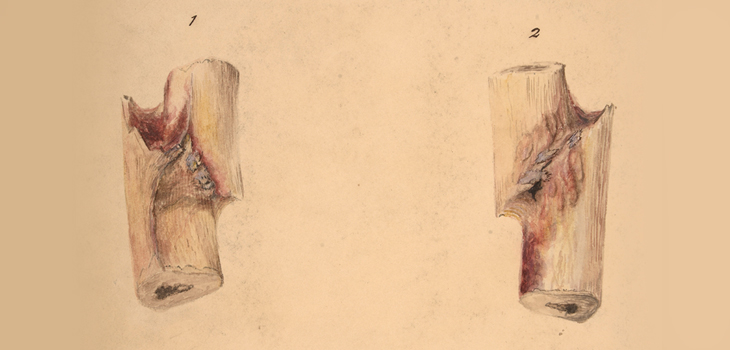
Secondary#bonenonunion#knee#flowtrial
The unpublished research, led by Paul Tornetta III, M.D. and Mohit Bhandari, M.D., incorporated baseline patient characteristics, injury mechanisms, fracture characteristics and postoperative complications, all of which were documented prospectively.
The authors wrote, “In a large series of open fractures with complete data sets nonunion was found to be associated with patient and injury factors, but not treatment variables.”
“Patients with comminuted, grade 3 open tibia fractures were most at risk for nonunion, particularly if there was associated bone loss or they developed a deep infection.”
“Using current fracture management protocols of early and complete debridement, stabilization and soft tissue coverage, only further attempts to reduce infection can be expected to decrease the rate of nonunion. The effect of smoking cessation at the time of injury is unknown but is recommended and should be further studied.”
Dr. Tornetta told OTW, “The data is from a large prospective trial with a complete data set as opposed to more retrospective work, therefore the results are more credible and likely more accurate. It is also generalizable as many centers were involved.”
“The study confirmed smaller trials that indicated that smoking is a risk factor for nonunion in open fractures. Additionally, the factors that influenced the development of a nonunion were patient and injury and complication based, not treatment based, so the die is cast at the time of injury in many cases.”
“The highest rate of nonunion is in grade 3 open comminuted tibial injuries, particularly if there is bone loss or patients smoked. Upper extremity injuries are less likely to go on to nonunion.”
“Going forward, we need to further delineate methods to diminish infection and determine if aggressive smoking cessation has an effect on the development of a nonunion. Large scale trials give the best information available in understanding the major problems in our field.”
Author
React:
Discussion
This is a fascinating development. In my practice we've seen similar outcomes with the revised protocol. The key differentiator seems to be patient selection criteria. Has anyone else noticed the correlation with BMI thresholds?
Great point. I'd push back slightly on the conclusion, the sample size in the cited study is too small to draw population-level inferences. That said, the directional signal is compelling and worth a larger RCT.
We implemented a similar approach last year. Early results are promising but we're still gathering 12-month follow-up data. Happy to share our protocol if anyone is interested.
Join the conversation
Orthopedic professionals are discussing this. Sign in and upgrade to read every comment and add your voice.